
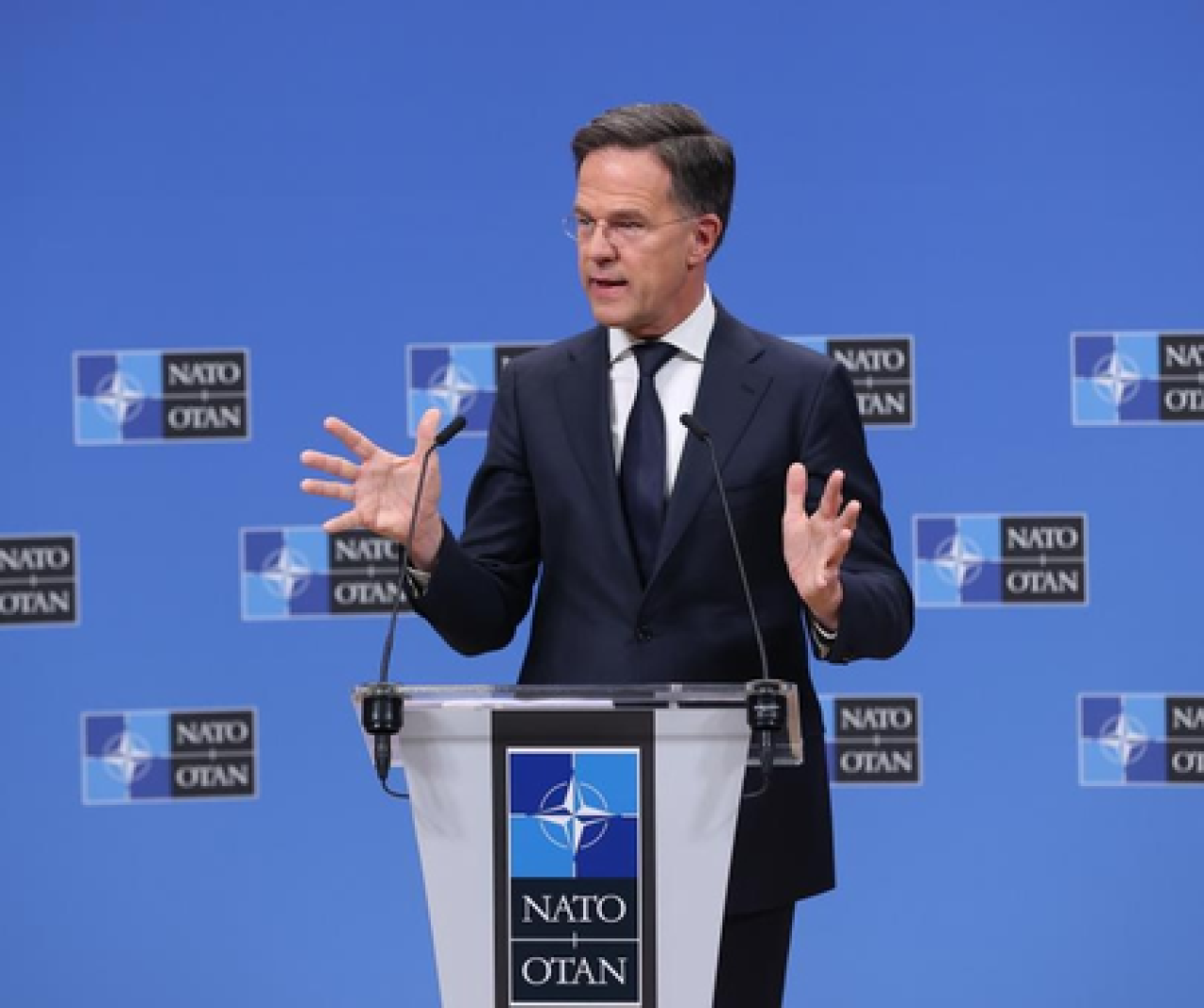
Washington, March 23: NATO Secretary General Mark Rutte has expressed support for US actions against Iran and warned that Iran is “very close” to developing missile capabilities that could pose a threat to Europe. His remarks come as NATO assesses reports of long-range attacks from a US-UK military base located in the Indian Ocean.
Speaking on Face the Nation, Rutte stated that NATO has not yet confirmed claims that Iran launched missiles at Diego Garcia, but if true, it would have serious implications. “We cannot confirm this at this time, so we are investigating. But if it turns out to be true, it would be further evidence that what President Trump is doing… is extremely important,” he said.
Rutte emphasized that Iran is nearing the capability to strike major European cities. “We definitely know they are very close to that capability,” he noted, referring to the potential striking power of Iranian missiles.
He warned that if Iran acquires both nuclear and missile capabilities, it would become a severe global threat. “If Iran has nuclear capability and it is coupled with missile capability, it would be a direct and existential threat to Israel, the region, Europe, and global stability,” he stated.
Supporting US efforts to weaken Iran’s military capabilities, Rutte cautioned that delays could prove costly. Citing North Korea as an example, he said, “If we keep talking for too long, the time may pass when it could have been stopped.”
His comments came after Donald Trump criticized NATO allies for not contributing enough to US operations, particularly in securing maritime routes in the Strait of Hormuz. Rutte acknowledged this frustration but noted that coordination among allied nations has begun. He mentioned that 22 countries, including NATO members and partners like Japan, South Korea, Australia, and Gulf nations, are participating in initiatives to ensure safe passage in the strait.
“We are working on these three questions—what do we need, when do we need it, and where do we need it—to ensure free movement in the strait,” he said.
Rutte also indicated that the timeline for military deployment is still under discussion, with planners working on it. “One of the most important questions is—when,” he added.
When asked if US pressure could affect NATO unity, Rutte responded that the alliance has always remained united in times of crisis. He also referenced cooperation on the Ukraine issue and decisions to increase defense spending.
Defending US diplomacy on the Ukraine issue, he stated that the US is trying to balance various interests while working towards a resolution of the conflict. “They have to balance all these different interests. Their effort to successfully end the Ukraine war is extremely important,” Rutte concluded.