Mumbai, the economic capital of India, was born from the sacrifices of 106 martyrs during the Samyukta Maharashtra movement, predominantly representing the Marathi-speaking community. Yet today, serious questions loom over the status and survival of the Marathi identity within the city.
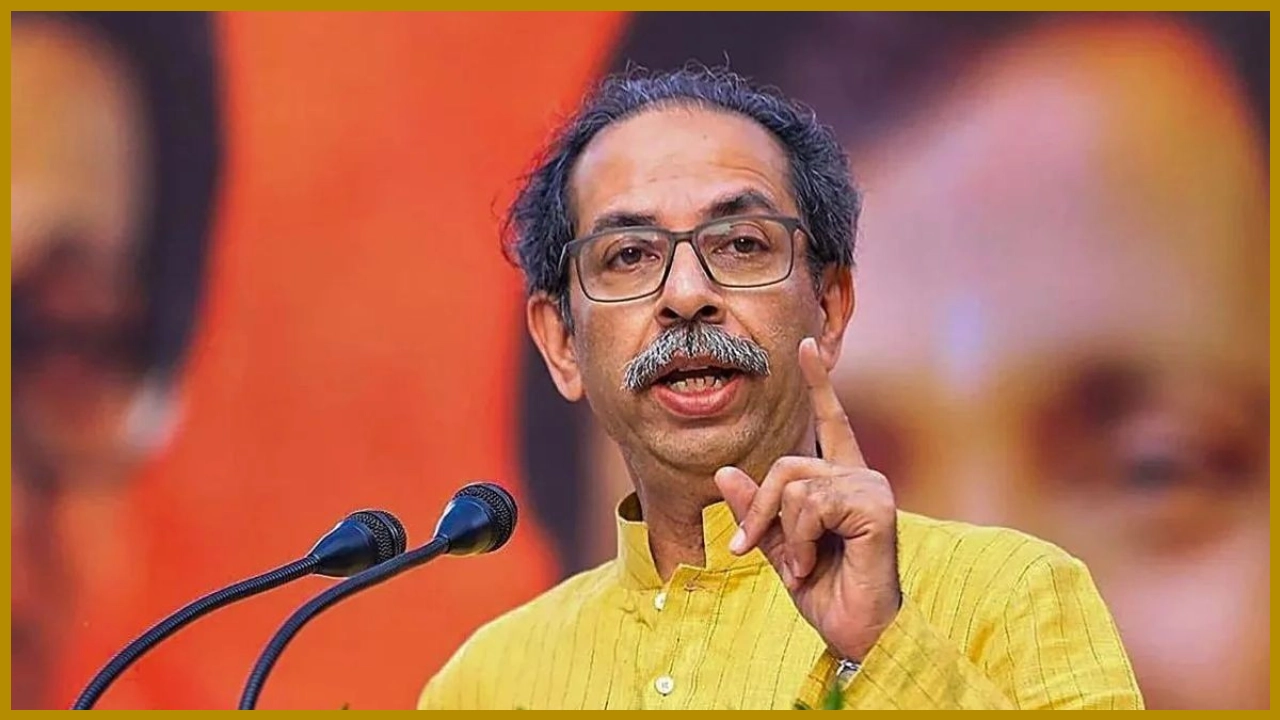
For nearly 25 to 30 years, the Shiv Sena, under the leadership of Uddhav Thackeray, governed the Mumbai Municipal Corporation (BMC). The pressing concern remains whether this period strengthened the Marathi community or worsened its condition. This question is now openly raised by ordinary Marathi citizens.

Once, neighbourhoods like Lalbaug, Parel, Shivdi, Dadar, and Girgaon were considered the heart of Mumbai, thriving on the sweat of mill workers and deeply rooted Marathi culture. However, the last two and a half decades have seen rapid cosmopolitan urbanisation, with the silent chimneys of mills replaced by towering glass structures.
The most significant fallout of this transformation has been the displacement of the Marathi community. Despite promises by the Uddhav Thackeray-led municipal government that Marathi residents would be rehoused in the new developments, the reality was starkly different. Marathi workers and residents were pushed out from central and southern Mumbai to peripheral towns like Virar, Karjat, Kasara, and Badlapur.

This displacement highlights a harsh truth: the very Marathi people who formed the backbone of the city’s politics are gradually vanishing from Mumbai’s map.
Economic empowerment remains a crucial issue. The BMC’s annual budget, which now exceeds ₹50,000 crore, has grown exponentially over 25 years. Yet, questions arise about how many Marathi entrepreneurs or contractors have truly benefited from this fiscal largesse. Allegations suggest that tenders for roads, drainage, and bridge construction have favoured select wealthy groups rather than local Marathi youth and contractors.

Consequently, the Marathi business community remains largely confined to small-scale enterprises such as street food stalls, while major economic control is held by influential non-Marathi players.
Emotionally charged slogans like “Marathi Manus” and “Marathi Asmita” have been rallying cries during elections, especially for Shiv Sena. However, critics argue that these sentiments have failed to translate into substantial opportunities for the community. The decline of Marathi-medium schools, alongside the rise of private English-medium institutions, exemplifies this gap between rhetoric and reality. Instead of elevating Marathi as a classical language, it is alleged that the language has been used merely for electoral gains.
Marathi workers commuting daily to Mumbai from districts like Thane, Palghar, and Raigad endure 4 to 5 hours of travel. While they serve the city diligently, their dream of residing in Mumbai has dimmed during the Uddhav Thackeray era, with no effective affordable housing schemes implemented. Redevelopment projects have primarily benefited builders, while original Marathi residents have been displaced under the guise of ‘maintenance’ issues.
As the BMC elections approach, political parties once again emphasise their role as protectors of the Marathi community. However, voters are increasingly sceptical about empty promises. Generations of Marathi citizens, who have loyally supported Shiv Sena, now seek accountability regarding their children’s future, employment, and housing rights.

Political analysts observe that despite claims of improving Mumbai’s infrastructure and aesthetics over 25 years, the comprehensive progress of the Marathi community has been neglected. Marathi youth openly express that emotional speeches do not fill stomachs or secure livelihoods.
The declining percentage of Marathi population in Mumbai is not just a statistic but a stark indicator of political failure. Despite asserting their rights over the city, the Marathi community has not attained the status they once hoped for.