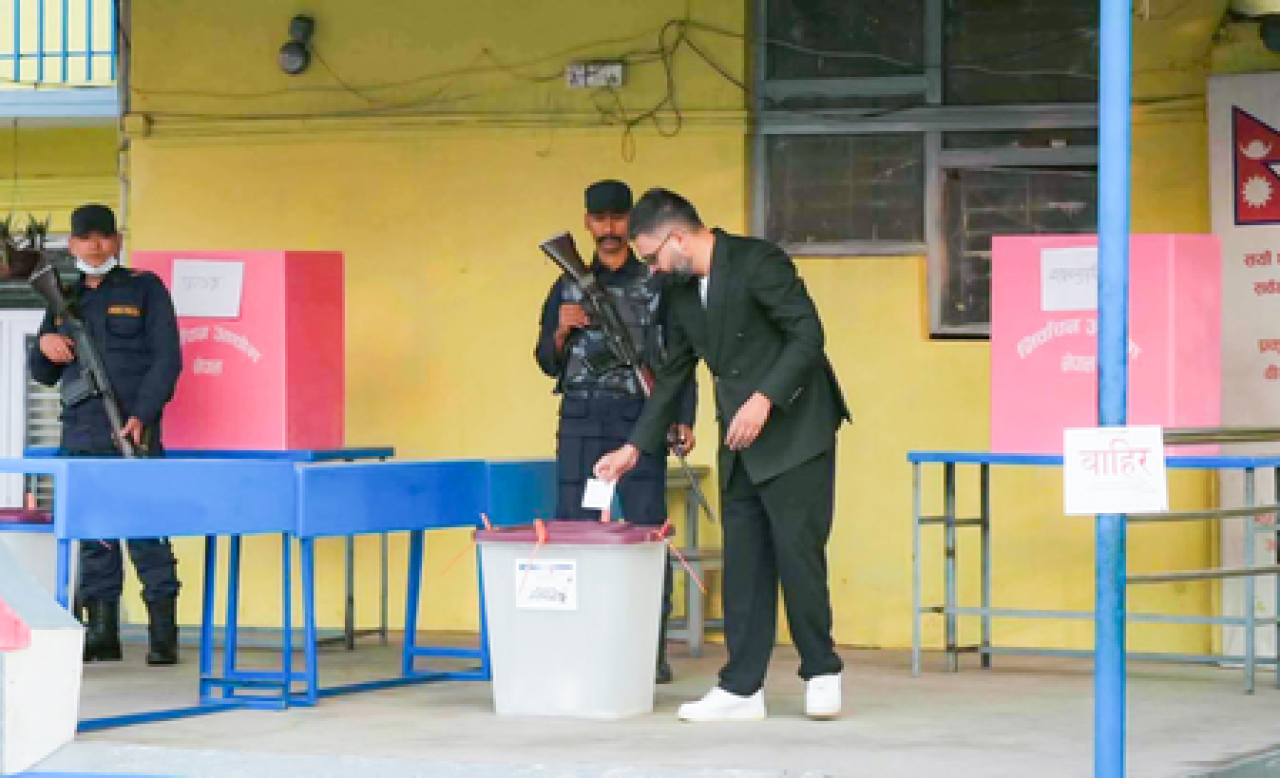
Kathmandu, March 18: The rising influence of Generation Z in Nepal has brought about a historic shift in the country’s political landscape. According to a recent report, the latest election results have defied all expectations, with Balendra Shah’s popularity and his party, the National Independent Party (RSP), securing nearly two-thirds of the majority, altering the political equation.
The report highlights that since the establishment of democracy in 2008, traditional parties such as the Nepali Congress, the Nepal Communist Party (Maoist Centre), and the Nepal Communist Party (UML) have dominated Nepal’s politics, with prominent leaders like Sher Bahadur Deuba, Pushpa Kamal Dahal (Prachanda), and K.P. Sharma Oli at the forefront.
Balendra Shah, known as Balen, is recognized as an engineer and rapper. He entered politics by winning the Kathmandu mayoral election as an independent candidate in 2022. With just three years of experience and no backing from a political family or strong party, he has made history as a candidate for Prime Minister and is on the path to becoming the youngest Prime Minister.
The report indicates that this mandate in a country marked by ethnic, regional, and religious divisions shows that issue-based politics can unite people.
It also notes that no party in Nepal has previously achieved a clear majority, leading to political instability due to coalition governments. However, this recent mandate appears to break that tradition.
According to the report, the opposition will now be compelled to play a more defined role, and the era of bargaining for government formation may come to an end.
This transformation in Nepal is drawing attention across South Asia, with changes already observed in countries like Bangladesh and Sri Lanka, while similar political waves may emerge in Pakistan and the Maldives.