
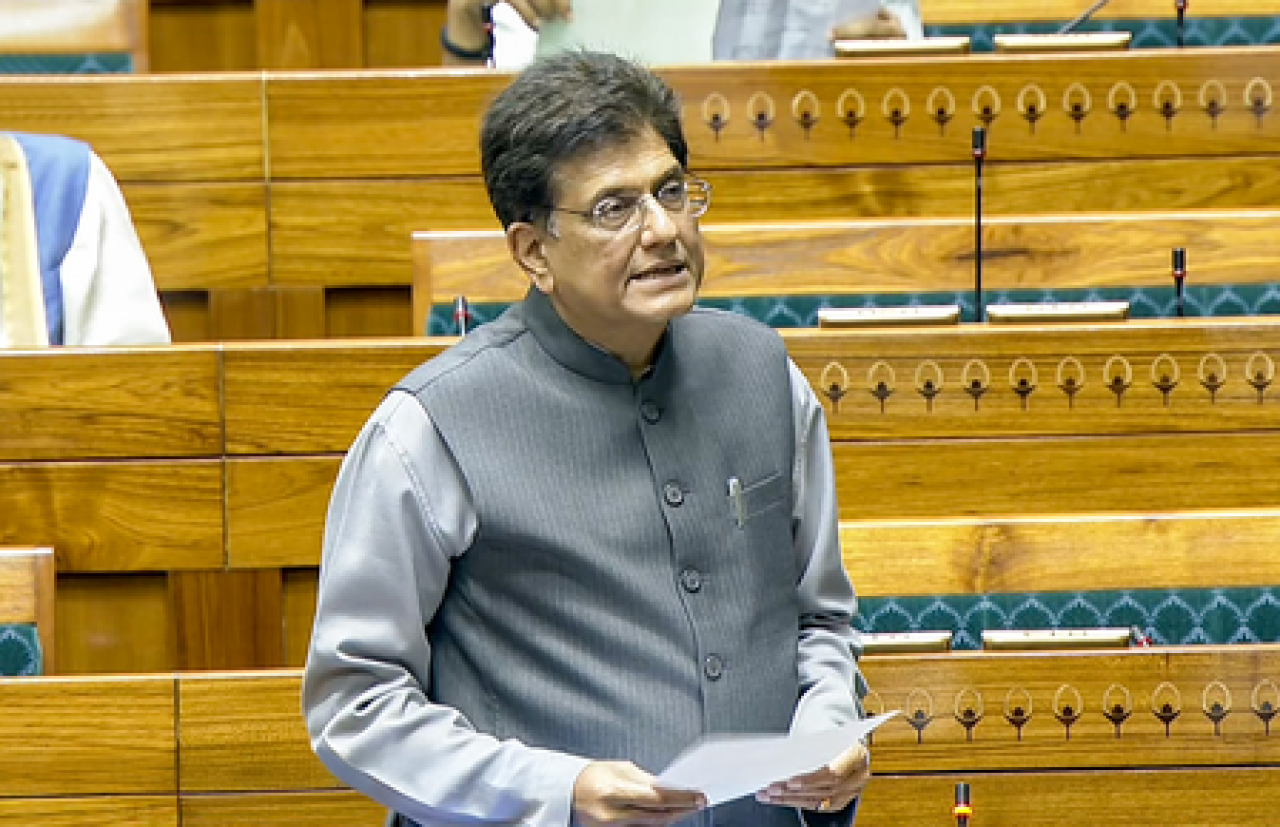
New Delhi, April 2: The Rajya Sabha passed the Jan Vishwas (Amendment) Bill 2026 on Thursday, aimed at reforming hundreds of outdated laws, many of which date back to the British era and have become irrelevant today. According to the central government, these reforms will simplify complex processes, reduce paperwork, provide relief to small traders, and ease the lives of citizens.
Union Commerce and Industry Minister Piyush Goyal explained that the government believes discipline comes not from excessive penalties, but from understanding and building trust. He emphasized that minor mistakes should be corrected with light penalties rather than resorting to court for every issue.
Goyal stated, “We do not want the laws of the country to operate solely out of fear of punishment. We want the nation to progress on the basis of trust, paving the way for a developed India by 2047.” He referenced Chanakya’s concept of ‘proportional punishment,’ highlighting that fair and just penalties earn respect and establish order in society.
He added that relying on fear to enforce laws does not foster a healthy society. True change occurs when people trust that the justice system will treat them fairly. Minor mistakes should not lead to severe penalties or public shame; instead, individuals should feel that the government and system trust them. This philosophy underpins the Jan Vishwas Bill.
Previously, individuals faced lengthy legal battles for minor infractions, often incurring costs far exceeding the fines, which could be as low as 100 or 200 rupees. The new amendments address over a thousand outdated laws, particularly those that have become irrelevant since the colonial period.
Goyal noted that the essence of ‘Ram Rajya’ was governance based on justice and trust rather than punishment. The Jan Vishwas Bill is a step in that direction, aiming to provide convenience to the public rather than causing distress.
He concluded that this initiative seeks to guide 21st-century India towards a new form of ‘Ram Rajya,’ where governance serves, trusts, and simplifies citizens’ lives. Instead of imposing heavy penalties for minor mistakes without malicious intent, the bill allows for a simple penalty to resolve issues promptly.
Previously, only courts had the authority to impose fines in many cases, burdening the judicial system with minor matters. The new bill aims to alleviate this burden by simplifying procedures. Reflecting on history, Goyal reiterated that true governance is based on justice and trust, where every citizen is heard and respected, allowing them to live without fear.