
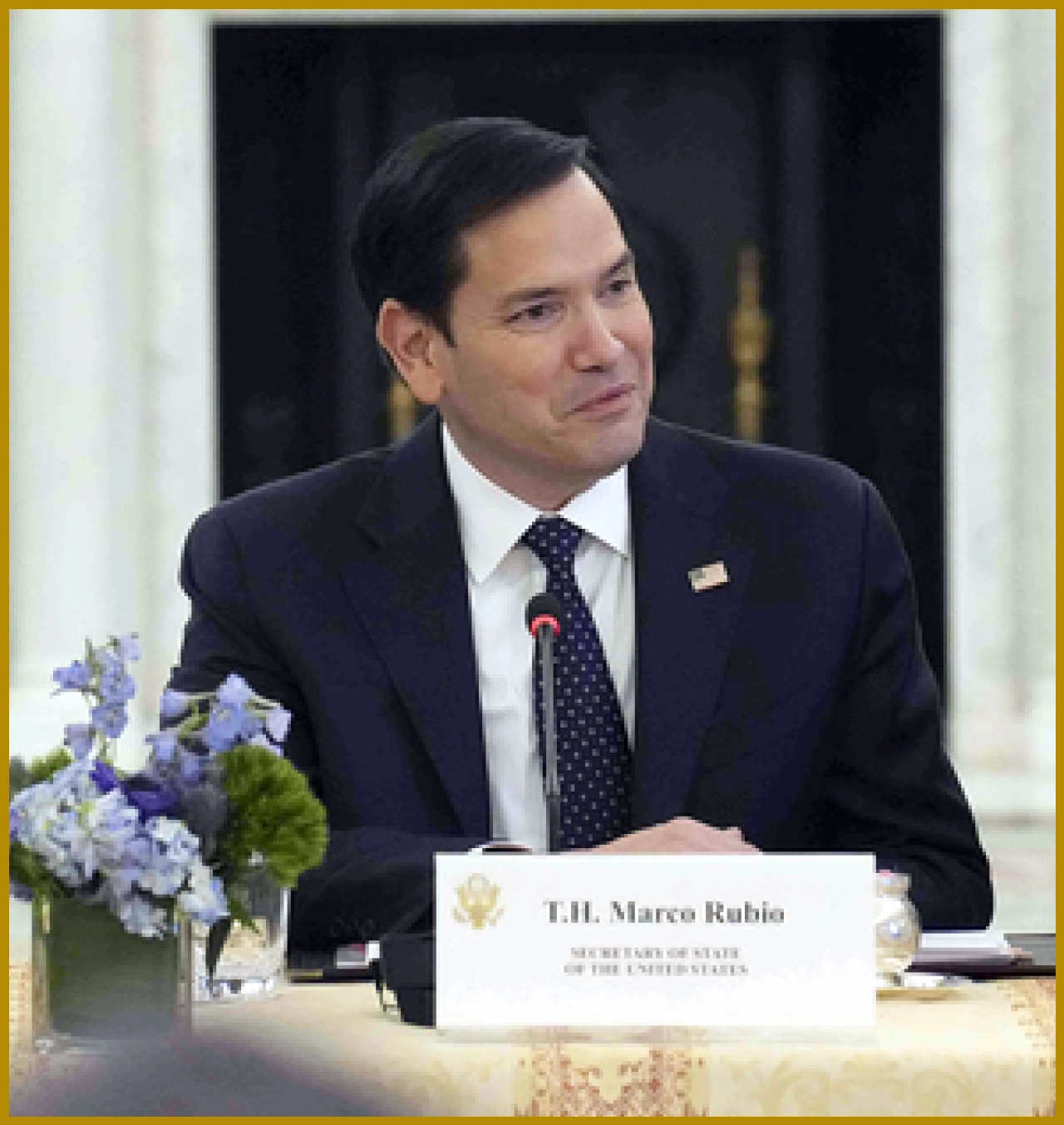
Washington, February 5: U.S. Secretary of State Marco Rubio has raised alarms regarding the global supply chain for critical minerals, which he claims is dangerously concentrated in the hands of a single country—China. Speaking at the Critical Minerals Ministerial, Rubio described this situation as a geopolitical risk, prompting Washington to initiate a new effort to diversify sourcing with 55 international partners.
Rubio emphasized that the aim of this initiative is to mitigate vulnerabilities that threaten economic growth, technological innovation, and national security. “The Critical Minerals Ministerial has had a fantastic start. We have 55 partners we hope to collaborate with; many have already signed up, and the goal here is very straightforward,” he stated.
Indian External Affairs Minister S. Jaishankar represented India at the conference. Rubio pointed out that policymakers in developed economies have overlooked the importance of securing raw materials. “We all fell in love with the design of these things, but we forgot that to design something, you have to be able to make it, and to make it, you need the essential materials to do so,” he remarked.
He warned that the current supply chain is “too concentrated in the hands of one country,” creating risks that extend beyond the economy. “In the worst-case scenario, this could be used as a weapon in geopolitics,” he added, noting that global disruptions such as pandemics or political instability could also hinder supply.
Rubio highlighted that while many countries possess critical minerals, they are often unable to develop them due to unfair competition. He explained that foreign competitors frequently undercut prices through government subsidies, making mining and processing economically unviable. “The private sector cannot invest in these things because some competitors will come in and operate at a cost below market share to dominate,” he said.
He warned that once a player controls the market, the consequences can be severe. “Once they dominate that industry and are the only ones doing it in the world, they can charge you whatever they want,” Rubio cautioned, noting that such dominance could also be used to exert pressure or be sensitive to global shocks. “This is not a sustainable situation.”
Rubio stated that the United States is trying to set an example through domestic reforms and new demand signals. He referenced permit reforms and the strategic reserve of critical minerals announced by former President Donald Trump. “We understand this is a global challenge that requires a global response,” he said.
He emphasized the launch of the FORGE initiative, noting that several countries have already joined and more are expected to participate. U.S. agencies, including the Development Finance Corporation and the Export-Import Bank, will provide financing tools for investment in critical minerals, with Treasury Secretary Scott Basset concluding the ministerial meeting later in the day.
Rubio mentioned plans to sign a new critical minerals framework with several partners, calling the meeting historic and stating that “the U.S. government has already pledged billions for this effort.”
On the situation in Ukraine, Rubio noted that technical military teams from Ukraine and Russia are meeting in a U.S.-linked forum. He warned against jumping to conclusions but acknowledged that the number of unresolved issues has decreased. “That list has gotten quite a bit shorter,” he said, adding that the remaining issues are the most challenging.
Rubio stressed that critical minerals will be essential for Ukraine’s recovery post-war. “This war will end at some point. And when it does, Ukraine must be able to utilize all its resources to rebuild,” he stated.
Responding to questions about Iran, Rubio indicated that President Trump is open to negotiations, asserting, “We do not see meetings as concessions,” and emphasized that any meaningful dialogue must address missiles, terrorism, nuclear programs, and the treatment of the Iranian people.
He also highlighted the roles of partners like Argentina and Morocco, stating that no country can meet its needs alone. “No country in the world has every critical mineral that is precious,” he concluded, underscoring the need for international cooperation.