
Washington, March 28: A senior US senator has raised serious concerns regarding the cost and viability of the proposed “Golden Dome” missile defense system. He warned that China’s growing space capabilities could pose new strategic risks to American resources.
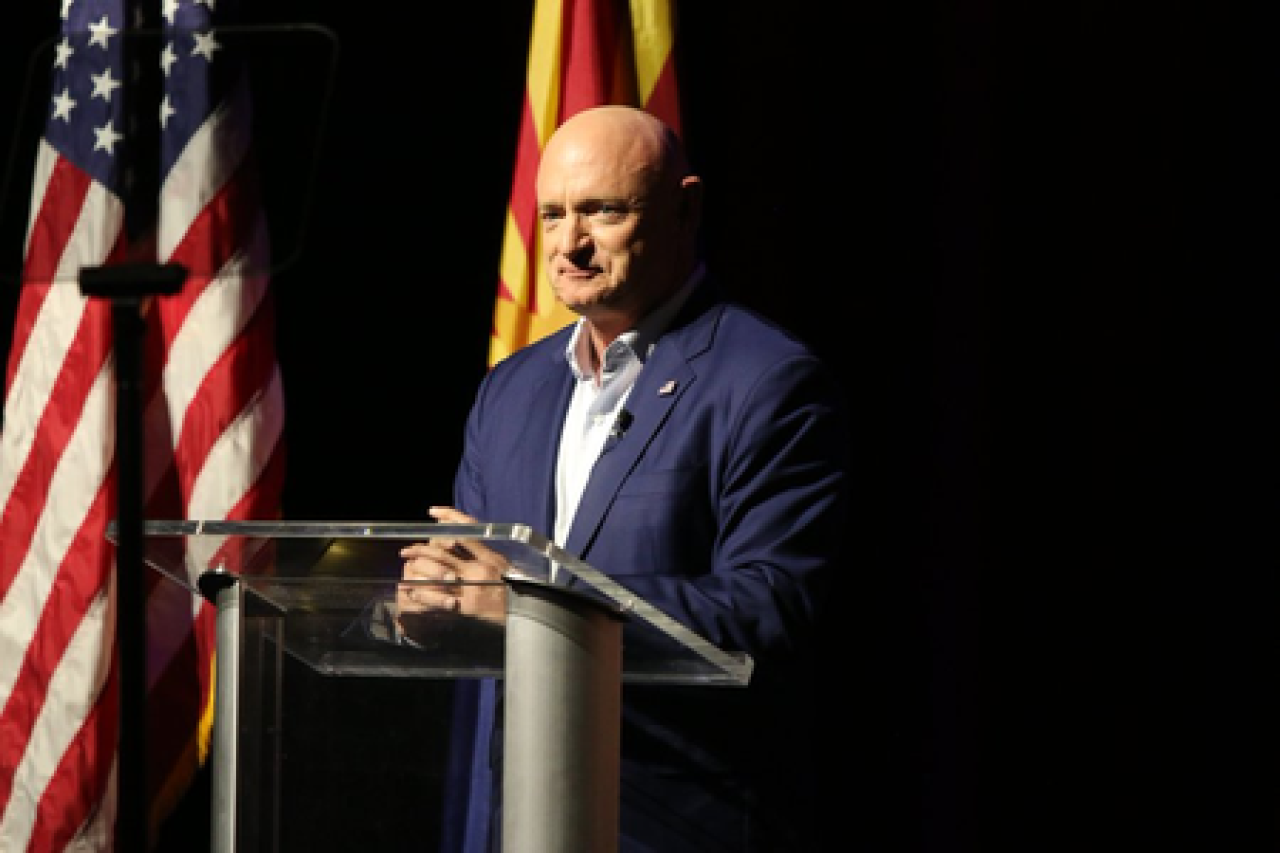
During a hearing with the US Space Command and Strategic Command, Senator Mark Kelly questioned whether this ambitious missile defense framework could fulfill its promises on a large scale.
“I understand that a stronger missile defense structure can enhance deterrence by denial and provide additional security for the country, but on a large scale, it becomes a question of cost, capability, and physics,” Kelly stated.
He expressed his major concern that the US might spend $500 billion or even $1 trillion only to end up with a system that essentially does not work or is not sufficiently effective by the deadline.
The proposed system envisions a multi-layered shield capable of intercepting large-scale missile attacks, including complex threats like hypersonic glide vehicles and advanced cruise missiles.
Admiral Richard Correll responded to Kelly’s inquiries, stating that the initial phase of this effort would involve strengthening detection and tracking systems. “The initial work on the sensor layer and the ability to detect and track advanced missiles… this is the first step of this structure,” he said.
Kelly acknowledged the need to address emerging threats, particularly from maneuverable hypersonic weapons, highlighting the difficulty of intercepting multiple missiles launched from different directions and platforms.
Correll noted that the system would require several developing technologies, including space-based interceptors. “This is a technology we need to develop to understand the limits of its interception capabilities,” he added.
The hearing also discussed China’s increasing space capabilities, which Kelly identified as a significant concern. He mentioned reports indicating that last year, China’s SJ-5 and SJ-21 maneuvered in orbit and possibly utilized satellite refueling. If confirmed, this would mark the first instance of one satellite refueling another in geostationary orbit.
Kelly warned that such developments could allow China to extend the lifespan of its satellites, reposition them, and potentially pose a threat to US systems.
General Stephen Whiting, head of the US Space Command, stated that Washington is closely monitoring these activities. He noted that China has demonstrated advanced capabilities in orbit, including the development of extensive maneuvering capabilities.
Whiting cautioned that if Beijing successfully develops permanent maneuvering capabilities in space, it could gain a strategic advantage similar to what the US has historically achieved in land, sea, and air warfare.
“My concern is that if they develop this, they will gain the ability to maneuver for advantage… I believe we should also develop our maneuver warfare capabilities to maintain the benefits of our combined military strength in space,” he concluded.