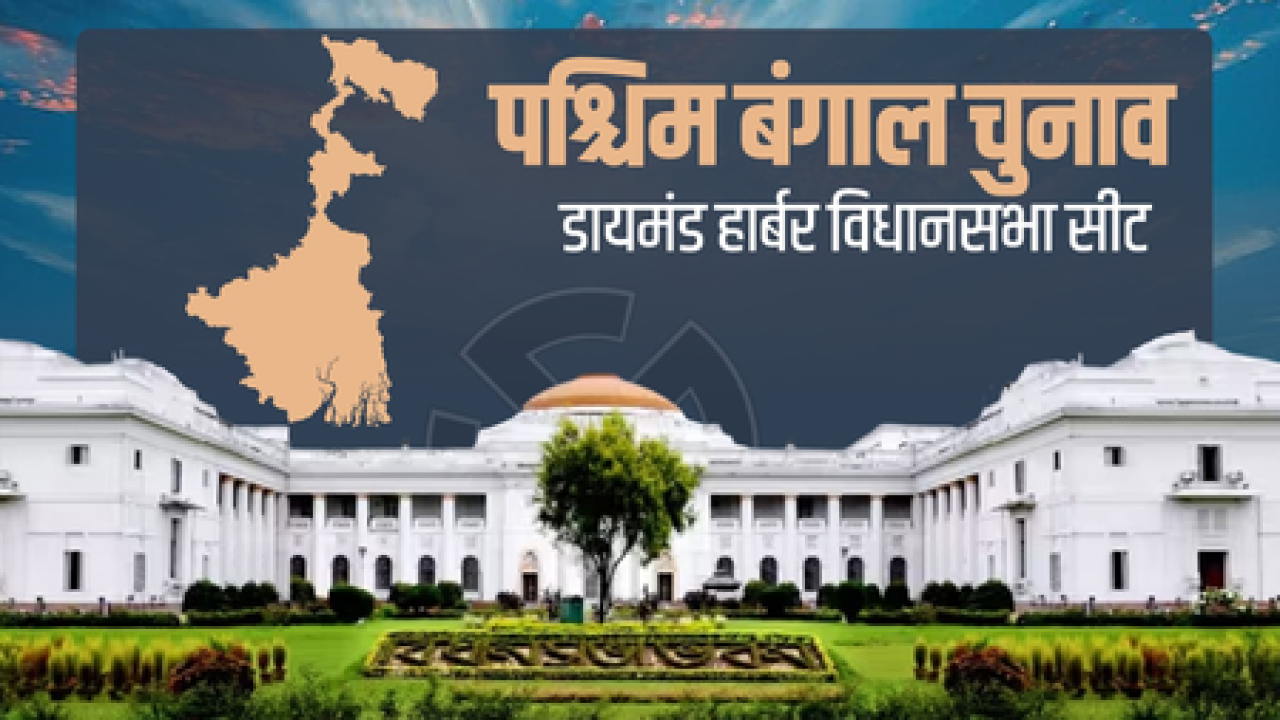
Kolkata, March 14: The Diamond Harbour Assembly seat in West Bengal is a fascinating intersection of history, geography, and politics. Located in the South 24 Parganas district, it is one of the seven assembly constituencies under the Diamond Harbour Lok Sabha seat and is part of the state’s total of 294 assembly seats. With the upcoming assembly elections, this seat has once again become a focal point of political discussions, as the All India Trinamool Congress (AITC) has maintained its dominance here for the past decade, while the Bharatiya Janata Party (BJP) seeks to challenge this status quo.
Diamond Harbour is significant not only politically but also historically and geographically. Situated on the eastern bank of the Hooghly River, this area is where the river meets the Bay of Bengal. This strategic location made it an important port during British rule. The area was originally known as Hajipur, which the British renamed Diamond Harbour. Archaeological findings suggest that human settlements in this region date back nearly two thousand years. It was once considered a stronghold for Portuguese pirates. Today, remnants of an old fort and a lighthouse along the river testify to its rich history.
The Diamond Harbour Assembly seat was established in 1951 and includes the Diamond Harbour Municipality, seven gram panchayats from the Diamond Harbour-1 block, and six gram panchayats from the Diamond Harbour-2 community development block. The constituency is predominantly rural, with only about 21 percent of voters residing in urban areas, while a large population lives in villages. Since 1952, this seat has participated in all assembly elections, witnessing the dominance of various political parties over time.
Initially, the Praja Socialist Party held sway here, winning the first two elections, including the 1952 election. The Indian National Congress also won several times, breaking the opposition’s winning streak. After the 1970s, the Communist Party of India (Marxist) (CPI(M)) dominated the seat, winning multiple elections from 1977 to 1991. However, the political landscape shifted after 2011, marking the rise of the Trinamool Congress.
In 2011, AITC’s Deepak Kumar Halder defeated the CPI(M) to win the seat. He secured victory again in 2016. Before the 2021 elections, Halder joined the BJP and contested as their candidate but faced defeat. The AITC won that election.
Abhishek Banerjee, a significant figure in Diamond Harbour’s politics, has represented the area in the Lok Sabha since 2014 and has been elected three times. As the nephew of West Bengal Chief Minister Mamata Banerjee, he is among the party’s key national leaders, strengthening the AITC’s organizational presence in the region.
In recent years, there has been a notable change in the voting share here. The BJP’s share, which was previously below 7 percent, rose to 36.10 percent in 2019 and 36.16 percent in 2021. However, it dropped to 20.25 percent in 2024. Voter turnout in Diamond Harbour has consistently been high, with 88.89 percent in the 2016 assembly elections, 85.37 percent in the 2019 Lok Sabha elections, 88.40 percent in the 2021 assembly elections, and 80.42 percent in the 2024 Lok Sabha elections.
Over the past decade, the election results indicate a strong position for the AITC, while the BJP has established itself as a significant opposition force in the region.