
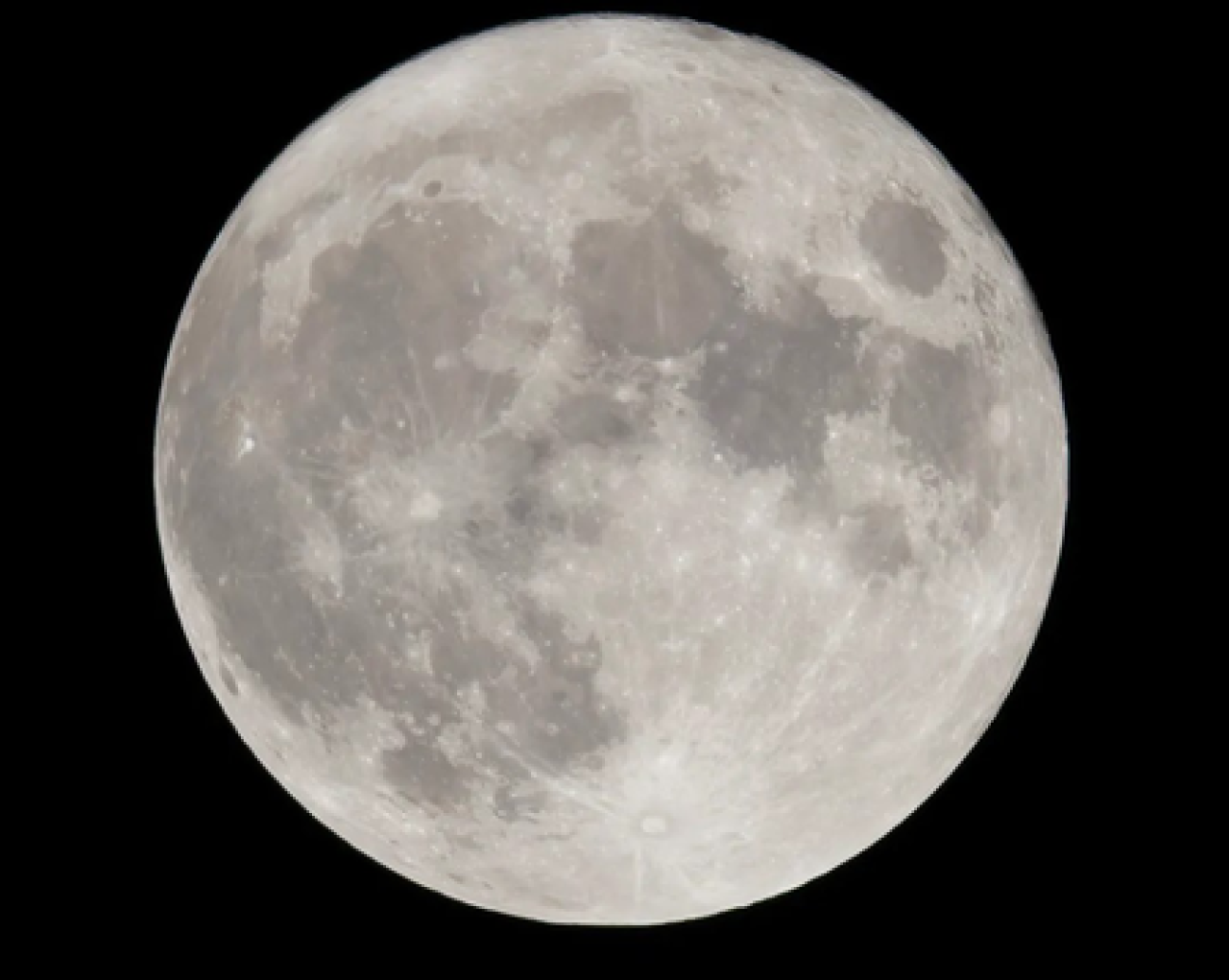
New Delhi, May 30: A stunning full moon will illuminate the sky on May 31. This celestial event occurs when the side of the moon facing Earth is fully illuminated by the sun’s light, making the moon appear in its brightest form. However, the moon’s shape and appearance change every night due to its various phases, which cycle approximately every 29.5 days.
According to scientists, the sun is the only body in our solar system that emits its own light. The sunlight reflects off both Earth and the moon. The moon does not generate its own light but reflects the sun’s rays, which we perceive as moonlight. As the moon continuously orbits Earth, the illuminated portion visible from our planet changes.
The moon has eight major phases: New Moon, Waxing Crescent, First Quarter, Waxing Gibbous, Full Moon, Waning Gibbous, Third Quarter, and Waning Crescent. This entire cycle repeats roughly every 29.5 days.
A full moon occurs when Earth, the moon, and the sun are nearly aligned. From our perspective, the moon is positioned directly opposite the sun, allowing us to see its fully illuminated side, which appears round and exceptionally bright. Typically, the full moon rises at sunset and sets at sunrise.
In astronomy, there are also special lunar events such as Supermoon, Blood Moon, Blue Moon, and Harvest Moon. During a Supermoon, the moon is relatively close to Earth, making it appear larger and brighter than usual. Conversely, during a Blood Moon, the moon may take on a reddish hue due to a lunar eclipse.
Despite its name, a Blue Moon does not actually appear blue. It usually refers to the second full moon occurring within a single calendar month. The full moon on May 31 will also be classified as a Blue Moon. According to another definition in astronomy, if there are four full moons in a season, the third full moon is also termed a Blue Moon.
–