Irans Military Power Severely Weakened, Claims Trump
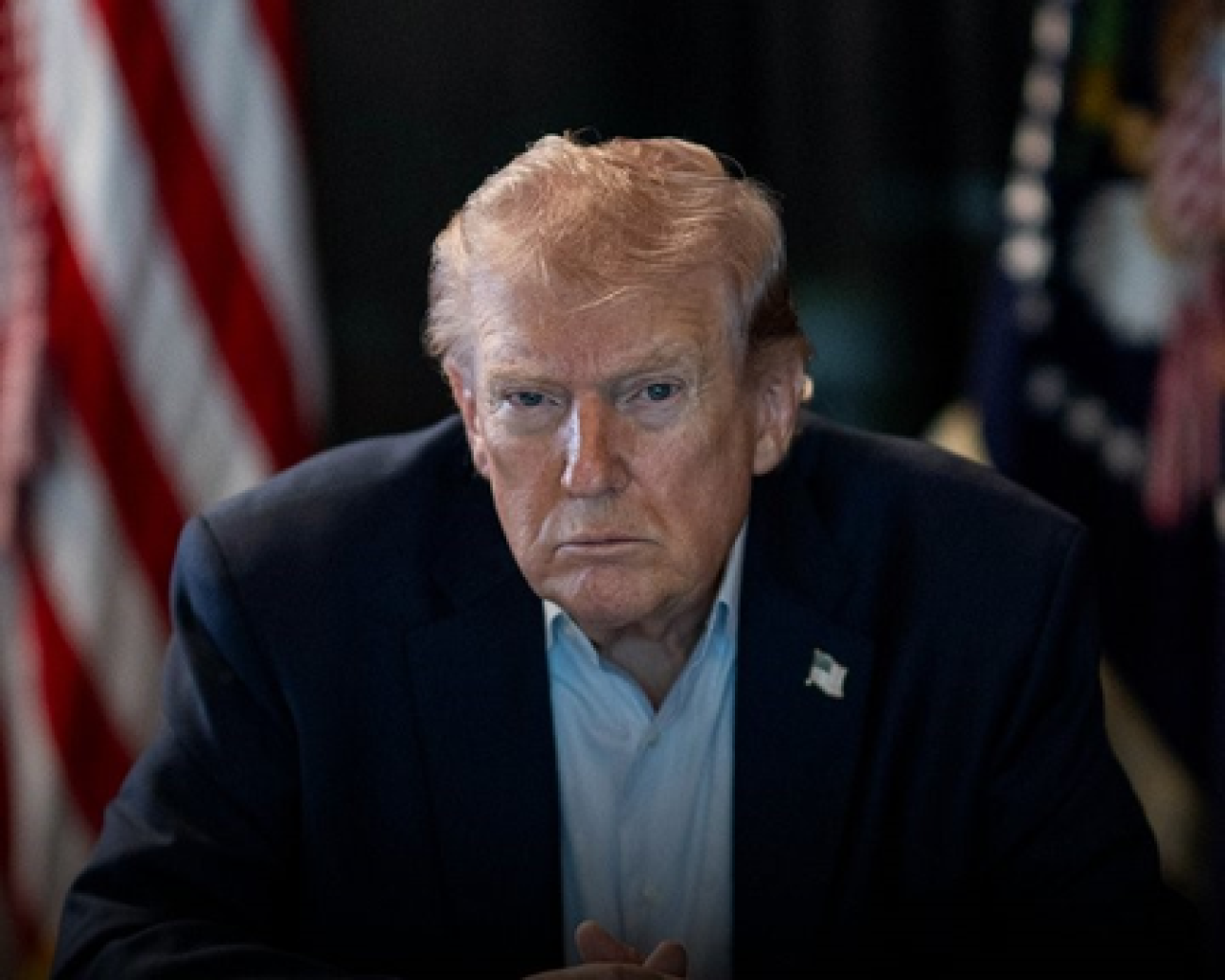
Washington, March 8: U.S. President Donald Trump has asserted that Iran’s military capabilities have been nearly dismantled following a week of ongoing military conflict. He stated that U.S. and Israeli attacks have inflicted significant damage on Iran’s navy, air force, and missile capabilities. However, he clarified that the U.S. is not in a hurry to negotiate with Tehran, emphasizing that Washington possesses ‘negotiating leverage’ for future discussions.
Speaking to reporters aboard Air Force One, Trump noted that Iran’s military suffered a major blow in the early stages of the conflict, which began with a joint military operation by the U.S. and Israel on February 28. He claimed that U.S. strikes have nearly obliterated Iran’s navy, stating, “We have destroyed their navy, taking out 44 ships. Their air force has also been eliminated, with every aircraft destroyed.”
Trump further mentioned that U.S. attacks have severely damaged Iran’s missile capabilities and launching systems, with approximately 70 percent of rocket launchers destroyed. He explained that these systems are costly and difficult to acquire. The destruction of launchers and production capacity has significantly reduced Iran’s ability to retaliate, with their attacks dropping to just 9 percent of what they were in the conflict’s initial days. He stated, “Their military is almost finished.”
While Trump refrained from specifying how long the conflict might last, he indicated that military actions would continue as long as necessary. He remarked, “I don’t know how long it will take; it will take as long as it takes.”
Trump also suggested that the conflict has impacted Iran’s leadership structure, stating, “We have eliminated the top leadership, and now there are people in charge whom no one knows.” Despite the military pressure, he reiterated that the U.S. is not currently seeking a diplomatic agreement, asserting that the U.S. has substantial negotiating leverage.
He claimed that Iran has recently apologized to neighboring Middle Eastern countries that it had previously attacked, interpreting this as a sign of Iran’s retreat. “They apologized to those Middle Eastern countries they attacked. This is akin to surrender,” Trump said.
Additionally, Trump dismissed allegations that U.S. strikes had targeted a girls’ school in Iran at the conflict’s outset, insisting that the information he has indicates the attack originated from Iran.
When asked about Russia’s involvement in aiding Iran, Trump replied, “No, I have no information on that.” He also made it clear that the U.S. would not allow Kurdish fighters to join the conflict, despite their willingness to participate. “We are good friends with the Kurds, but we do not want to complicate this war further. I do not want the Kurds involved,” he stated.
Regarding potential changes to Iran’s geographical or political structure post-conflict, Trump acknowledged, “It is possible that the country may not look the same as it does now.” He emphasized that the objective of the military campaign is to permanently weaken Iran’s capabilities, concluding, “When this is all over, the world will be a much safer place.”