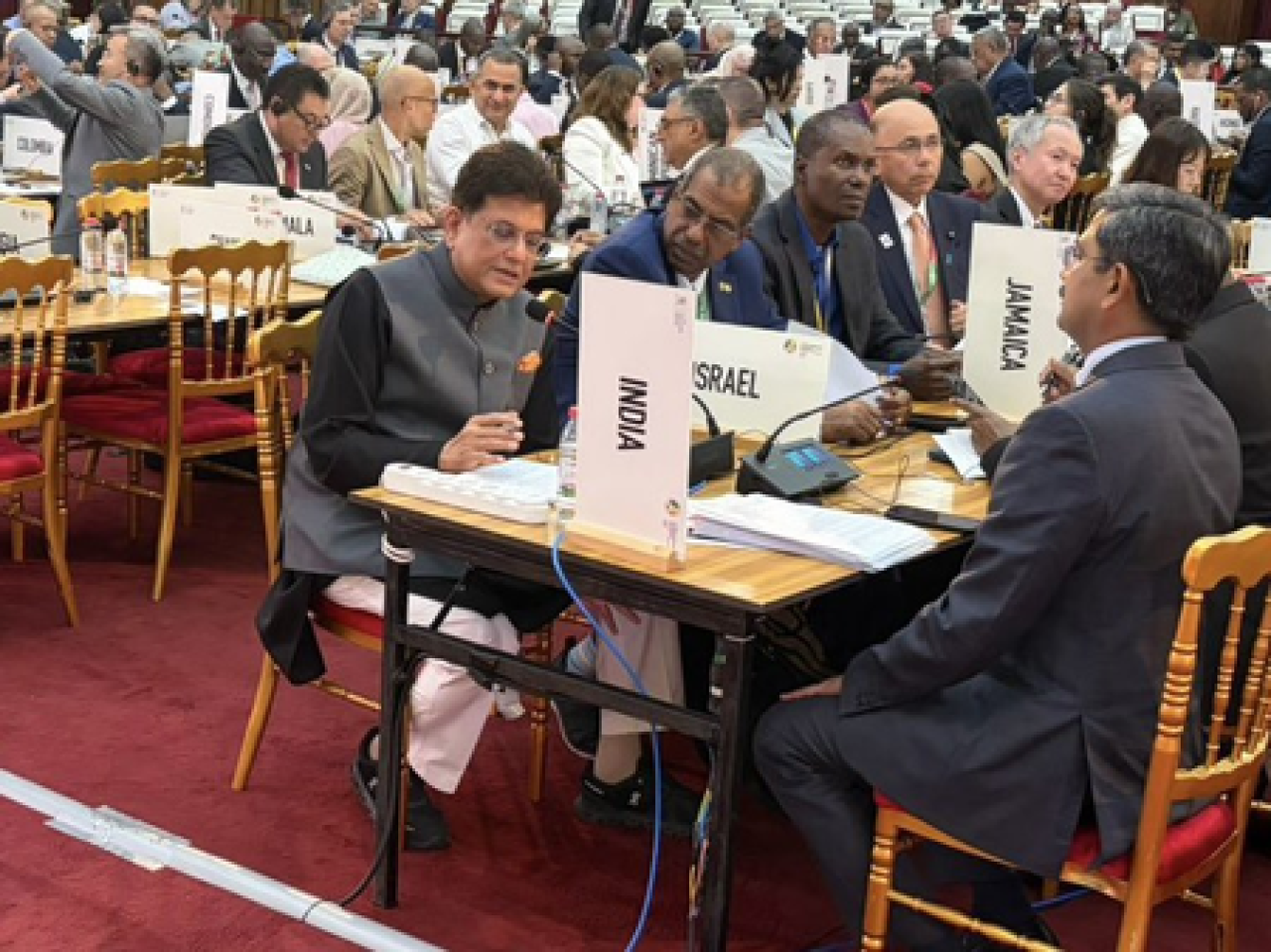
New Delhi, March 28: Union Commerce and Industry Minister Piyush Goyal emphasized the importance of protecting the livelihoods of small fishermen during discussions at the 14th Ministerial Conference of the World Trade Organization (WTO) held in Cameroon. Goyal stated that India has adopted a balanced and people-centric approach to fisheries management.
In a post on social media platform X, he shared insights from his address at the ministerial session on ‘Fisheries Subsidies.’ He highlighted that fisheries are a crucial source of livelihood and food security in India, supporting over 9 million fishermen, most of whom come from small, traditional, and artisanal communities that employ sustainable fishing practices.
Goyal reiterated India‘s long-standing commitment to conservation, citing measures such as annual fishing bans, and noted that sustainability has been an integral part of the country’s approach even before it became a global priority.
He pointed out that the challenges of overproduction and excessive fishing are primarily due to heavily subsidized industrial fleets, not small-scale fishermen from developing countries. Goyal stressed that global decisions should be fair and should not disproportionately impact vulnerable communities.
The minister also expressed India’s support for adopting the draft decision on fisheries subsidies, asserting that future outcomes should be equitable and development-oriented, safeguarding both marine resources and livelihoods.
During the conference, Goyal held bilateral meetings with several counterparts, including UK Secretary of State for Business and Trade, Peter Kyle, to discuss priorities under the MC-14 agenda and progress on the India-UK Comprehensive Economic and Trade Agreement (CETA) signed in July 2025.
He also congratulated Cameroon’s Trade Minister, Luc Magloire Mbarga Atangana, on hosting the WTO Ministerial Conference and praised the organization of the event. Both parties discussed enhancing bilateral trade, investment, and regional cooperation.
Goyal reiterated India’s support for a reformed, relevant, and effective WTO, emphasizing the need to maintain core principles such as consensus-based decision-making, Most Favored Nation (MFN) status, and Special and Differential Treatment (S&DT) to ensure fairness in global trade.