
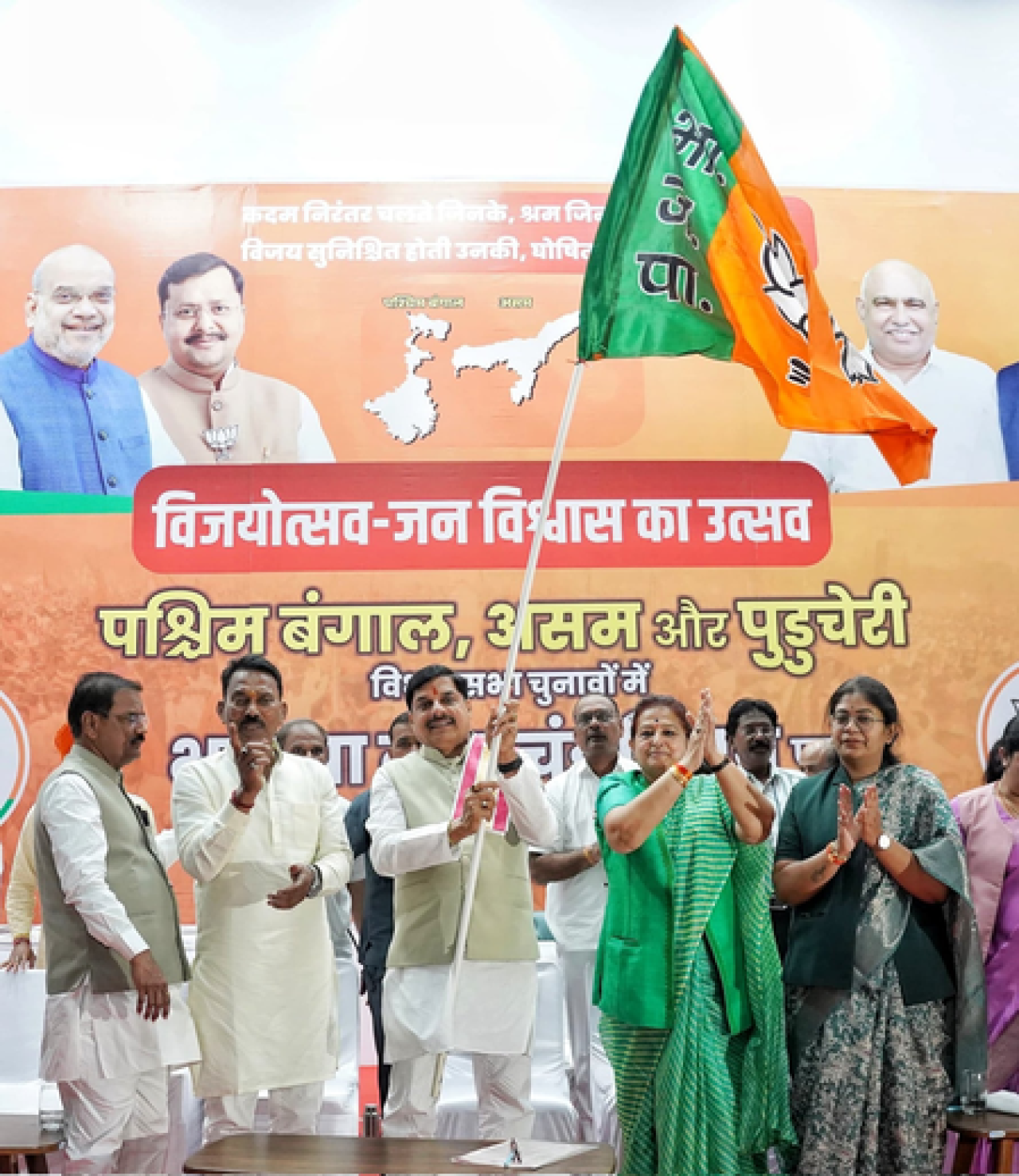
Bhopal, May 6: Madhya Pradesh Chief Minister Mohan Yadav launched a scathing attack on the Congress, Left parties, and Trinamool Congress (TMC) on Wednesday, accusing them of slowing down development in West Bengal. He asserted that the government led by the Bharatiya Janata Party (BJP) will bring better governance and accelerated growth to the eastern state.
While addressing an event in Burhanpur district, CM Yadav stated, “Congress, Left parties, and TMC have pushed West Bengal towards backwardness. A governance model under BJP will ensure rapid development in Bengal.”
He accused Congress of engaging in divisive politics, claiming that the public has now understood its intentions.
Presenting the BJP’s long-term political roadmap, the Chief Minister said, “We are not only moving towards victory in 2029 but also towards continuous success until 2047. The party is focused on inclusive and sustainable development, preparing for the next two decades with a clear vision.”
Highlighting the party’s electoral progress in West Bengal, CM Yadav noted that the BJP has consistently strengthened its presence in the state, having made its debut in the assembly by winning three seats in the 2016 elections.
Discussing ideological issues, he remarked that “Vande Mataram” played a crucial role in instilling patriotism during the freedom struggle. He criticized Congress for creating divisions regarding the national anthem and failing to honor nationalist sentiments.
The Chief Minister emphasized that under Prime Minister Narendra Modi’s leadership, India is rapidly emerging as a global economic power. Madhya Pradesh is contributing to this growth by creating investment opportunities and promoting industrial expansion across the state.
He added that the state government is focusing on both agriculture and industry, particularly on increasing farmers’ incomes and creating job opportunities for the youth. Under the ‘Kisan Kalyan Varsh’ initiative, the state government is working to strengthen the rural economy through improved irrigation, market access, and crop diversification.