
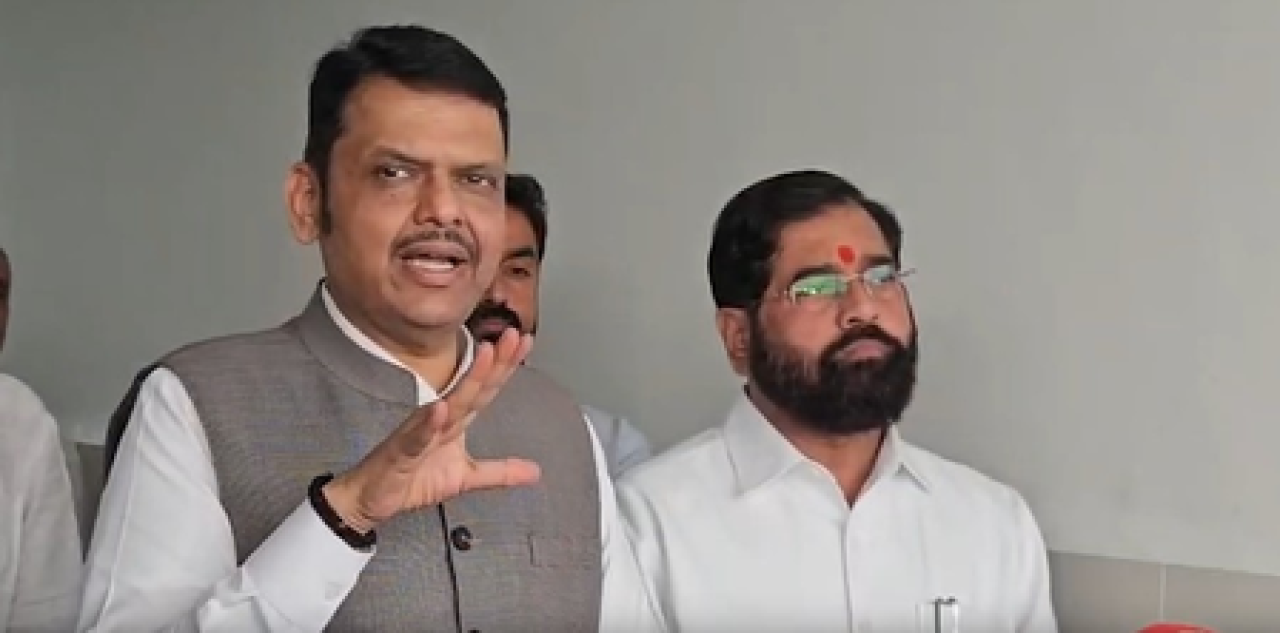
Mumbai, May 26: Maharashtra Chief Minister Devendra Fadnavis announced on Tuesday that there has been a significant increase in regional retail fuel consumption compared to normal seasonal patterns. He stated that the state’s Food and Civil Supplies and Home Departments are jointly overseeing the supply and distribution system.
CM Fadnavis mentioned that to stabilize market demand, the state has increased petrol distribution by 23% and diesel by 52%. There are indications of fuel hoarding, which is being closely monitored.
He highlighted that different areas are experiencing varying degrees of increase, with Akola seeing a 154% rise and several districts, including Chhatrapati Sambhajinagar, Beed, Bhandara, Buldhana, Gondia, and Hingoli, recording an increase of up to 70% in general market consumption.
The administration is analyzing the gap between commercial and retail fuel supply sectors to ensure that retail resources effectively reach the agricultural and consumer sectors.
CM Fadnavis assured that supply operations are being closely monitored and are continuing without interruption. Public Sector Undertaking (PSU) oil marketing companies have confirmed that there is sufficient stock of petrol and diesel available at all petrol pumps and storage sites across Maharashtra. The state government and oil companies are regularly monitoring the stock at petrol pumps to ensure uninterrupted availability.
Regarding the ongoing onion crisis, Fadnavis criticized the opposition for politicizing the issues faced by producers and stated that the state government is fully sensitive to their concerns and is committed to assisting them in the current situation.
He announced that the central government has called a meeting on Wednesday to discuss the problems faced by onion producers.
Discussing current concerns related to crops and adjustments in agricultural storage, Fadnavis elaborated on the recently implemented shared market pricing structures. The central government has increased the support for onion procurement, raising the rates by 3.5 rupees to approximately 15 rupees per kilogram. The state government has requested central officials to conduct a comprehensive review of this matter.
He noted that this review meeting is scheduled for Wednesday evening, where long-term strategies and support systems for market intervention for farmers will be evaluated.