
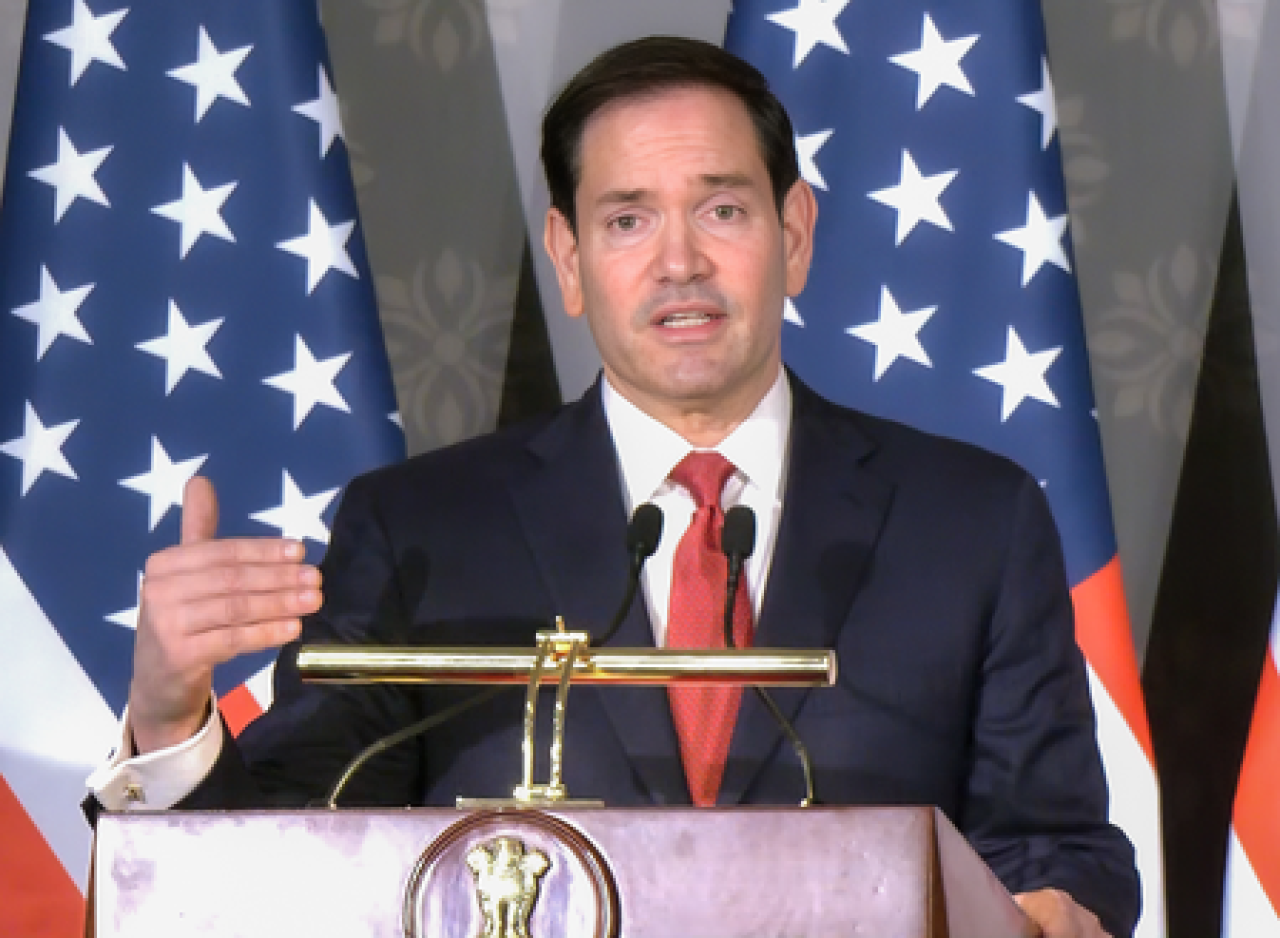
Washington, June 3: US Secretary of State Marco Rubio has warned that China’s growing dominance over the global supply chain of essential minerals poses a threat to both economic and national security. He stated that the United States is expanding partnerships worldwide to reduce its reliance on Beijing for resources critical to advanced technologies, defense systems, and industrial production.
Speaking before the US House Appropriations Subcommittee, Rubio highlighted that the concentration of such crucial minerals and their processing capabilities in a single country represents a significant strategic weakness not just for the US, but also for its allies in Europe and Asia.
He emphasized that depending on one country for up to 90 percent of essential resources is detrimental to the global economy and, frankly, dangerous for national security, whether it concerns the industrial base, defense systems, or technology.
This statement comes at a time when the Trump administration is prioritizing ‘critical minerals‘ in its economic and foreign policy, especially amid rising competition with China.
Critical minerals such as lithium, cobalt, rare earth elements, and graphite are vital for electric vehicles, semiconductors, batteries, telecom equipment, renewable energy technologies, and modern military systems.
Rubio noted that the US is working with numerous countries to diversify the supply chain, aiming to establish alternative sources for both raw materials and their processing.
He mentioned, “We have included over three dozen countries in the Critical Minerals Ministerial Meeting.”
According to him, critical minerals have now become a crucial part of US diplomacy, with efforts underway in nearly every American embassy.
He stated that this issue has gained significant priority in US foreign policy to reduce dependence on China in collaboration with various countries.
Rubio also pointed out that excessive reliance on a single country for essential goods can be exploited for economic pressure during times of crisis.
The Secretary of State further explained that the US strategy extends beyond merely acquiring minerals; it also focuses on developing processing capabilities in countries where these resources are found.
John Molinar, chairman of the House Select Committee on the Chinese Communist Party, also emphasized the importance of strengthening the supply chain and reducing dependence on China.
Rubio expressed similar concerns in other sectors, such as pharmaceuticals, where production is heavily concentrated in China, posing risks to global markets and national security.