
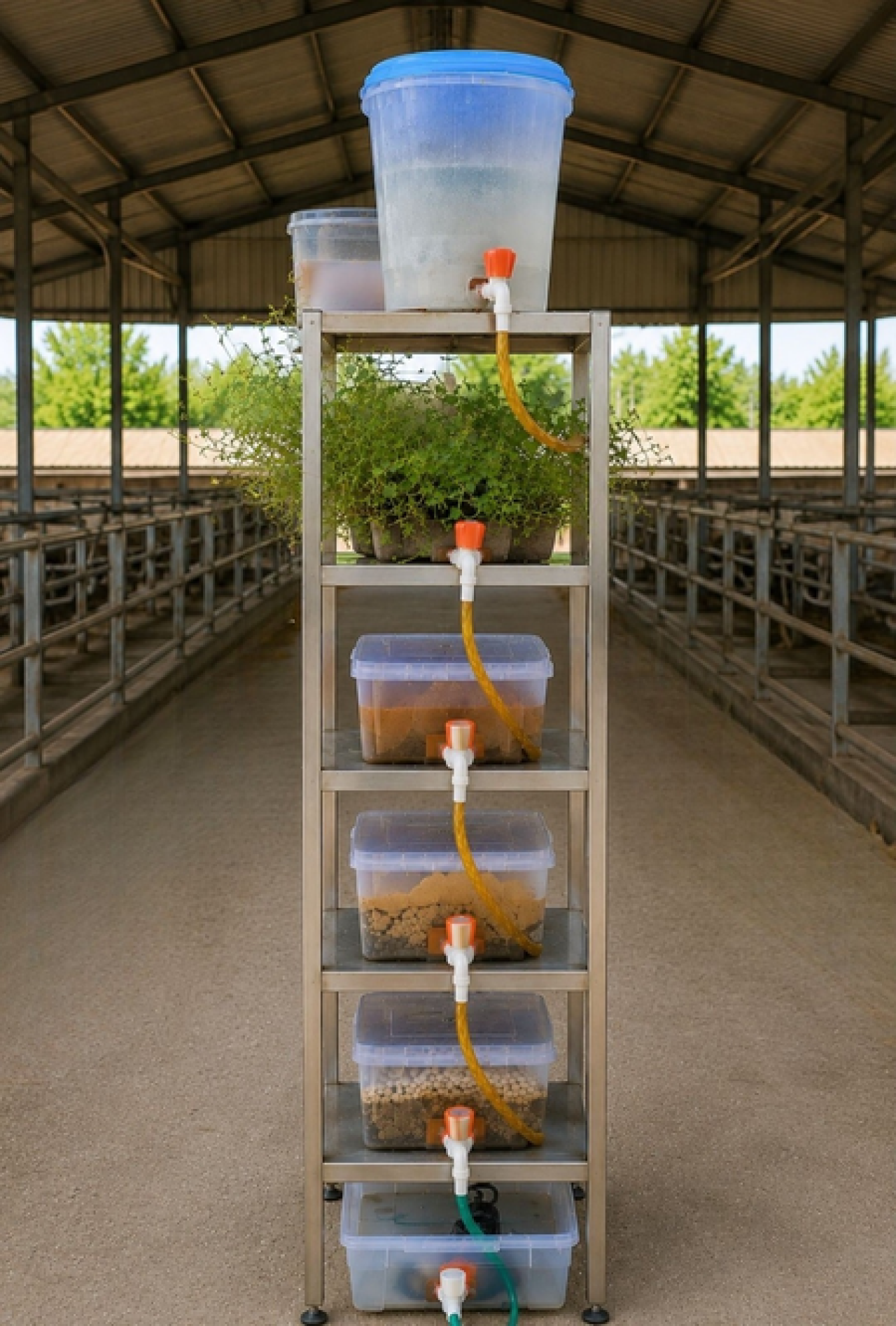
New Delhi, May 22: Scientists at a central university have developed an intriguing and eco-friendly technique to purify industrial wastewater. This system uniquely combines earthworms, aquatic plants, microorganisms, and hydroponics, a soil-less plant cultivation method.
Researchers from NIT Rourkela created this technology specifically to treat wastewater from the dairy industry, which is often heavily polluted. The water discharged from factories producing cheese, yogurt, and other dairy products contains high levels of fats, proteins, and carbohydrates. When this wastewater is released into rivers or ponds, it depletes oxygen levels, posing a threat to aquatic life.
Traditional methods used until now often faced issues with filters getting clogged quickly. To address this, Professor Kakoli Karar Paul and researcher Dr. Pragyan Das from NIT Rourkela have designed a multi-layered biological system, which has also received a patent.
In this system, the dirty water first enters a reactor containing earthworms and aquatic plants. The earthworms break down large organic waste into smaller pieces, making it easier for microorganisms to eliminate them. The roots of the plants help prevent the filters from clogging. The water then passes through a layer of sand, which filters out solid impurities.
In the third stage, pellets made from fly ash absorb phosphorus and other pollutants present in the water. The water then flows through a layer of gravel, where beneficial microorganisms clean any remaining waste.
The final stage of this process is particularly noteworthy. Here, the water reaches a hydroponic chamber, where the roots of the plants remain submerged. These roots release oxygen into the water, promoting the rapid growth of beneficial bacteria that further reduce pollution. According to the researchers, this entire system can be set up at a laboratory level for approximately ₹10,000.
This system can purify about 30 liters of dairy wastewater daily and can be scaled up as needed. Notably, the treated water can be used for agriculture, as it retains useful nutrients like phosphates. Additionally, the aquatic plants used in this process can be repurposed for animal feed, biogas, and biodiesel production. This technique not only cleans wastewater but also represents a significant step towards converting waste into resources.