
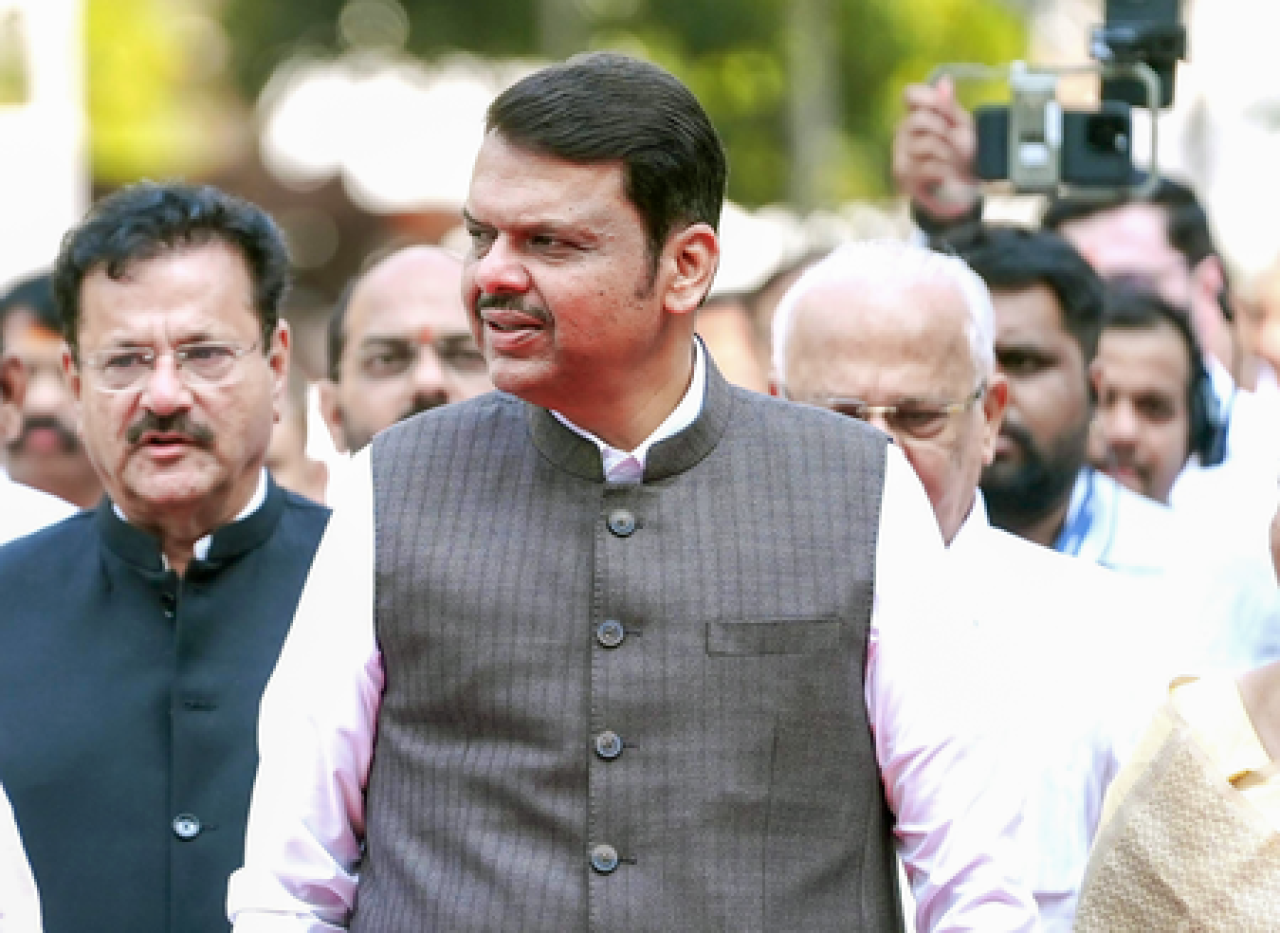
Mumbai, May 18: Maharashtra Chief Minister Devendra Fadnavis emphasized the need for improved and easily accessible healthcare services across the state during a meeting on Monday. He stated that the state government is committed to effectively implementing various central and state schemes to enhance healthcare delivery for the people of Maharashtra.
Fadnavis directed all departments to work in coordination and ensure the timely completion of projects such as the Ayushman Arogya Mandir, Critical Care Blocks, and laboratory construction, aiming to make the state’s healthcare system more effective, high-quality, and user-friendly.
To monitor social sector schemes, a Chief Minister’s War Room has been established. Under this framework, Fadnavis reviewed various central and state health initiatives, including the Prime Minister’s Jan Arogya Yojana, strengthening health infrastructure under the 15th Finance Commission, the Ayushman Bharat Health Infrastructure Mission, the establishment of new medical colleges, and pending tasks related to the HPV vaccination campaign.
The Chief Minister highlighted the government’s focus on providing quality and accessible healthcare services in both urban and rural areas of the state. He mentioned that a strategic plan for Maharashtra has been developed after studying healthcare systems in several states, including Tamil Nadu, and it is now crucial to implement it effectively.
Fadnavis stressed the importance of timely utilization of funds received from the central government. He instructed all district collectors to personally oversee the construction of Ayushman Arogya Mandir, Critical Care Blocks, and integrated public health laboratories. While initial delays were noted, he expressed satisfaction with the current performance of the districts.
However, he pointed out that progress remains slow in some districts and urged all to focus on completing projects within the stipulated time. He emphasized that there should be no lack of coordination among departments regarding pending projects and called for a positive administrative mindset to ensure completion.
The Chief Minister also underscored the need to change the perception that the health sector is of low priority. He insisted that government health facilities must showcase quality, cleanliness, and better branding to alter the belief that government hospitals provide subpar services.
Fadnavis encouraged officials to adopt new technologies, stating that modular technology can lead to better quality and timely construction. He referenced improvements made at a primary health center in Pune, suggesting that similar initiatives should be replicated in other parts of the state.
He concluded by stating that every official must take responsibility for their work to ensure noticeable improvements in the government healthcare system. He directed the immediate resolution of obstacles in establishing medical colleges and noted that the timelines discussed in the meeting would be officially recorded.
The next War Room meeting will review progress, and officials are expected to fulfill the commitments made today. He urged that issues should not be left unresolved and that follow-ups should be increased. If problems persist at any level, they should be escalated to department heads, secretaries, the chief secretary, ministers, or the Chief Minister without delay.
Deputy Chief Minister Eknath Shinde added that projects related to Ayushman Arogya Mandir and medical colleges are being expedited to strengthen the state’s healthcare infrastructure. He reiterated that enhancing healthcare facilities is a primary objective of the government, with ongoing reviews of the Ayushman Arogya Mandir scheme. Upgrading primary health centers will provide better services to both rural and urban populations, while medical college projects will also increase human resources in the healthcare sector.