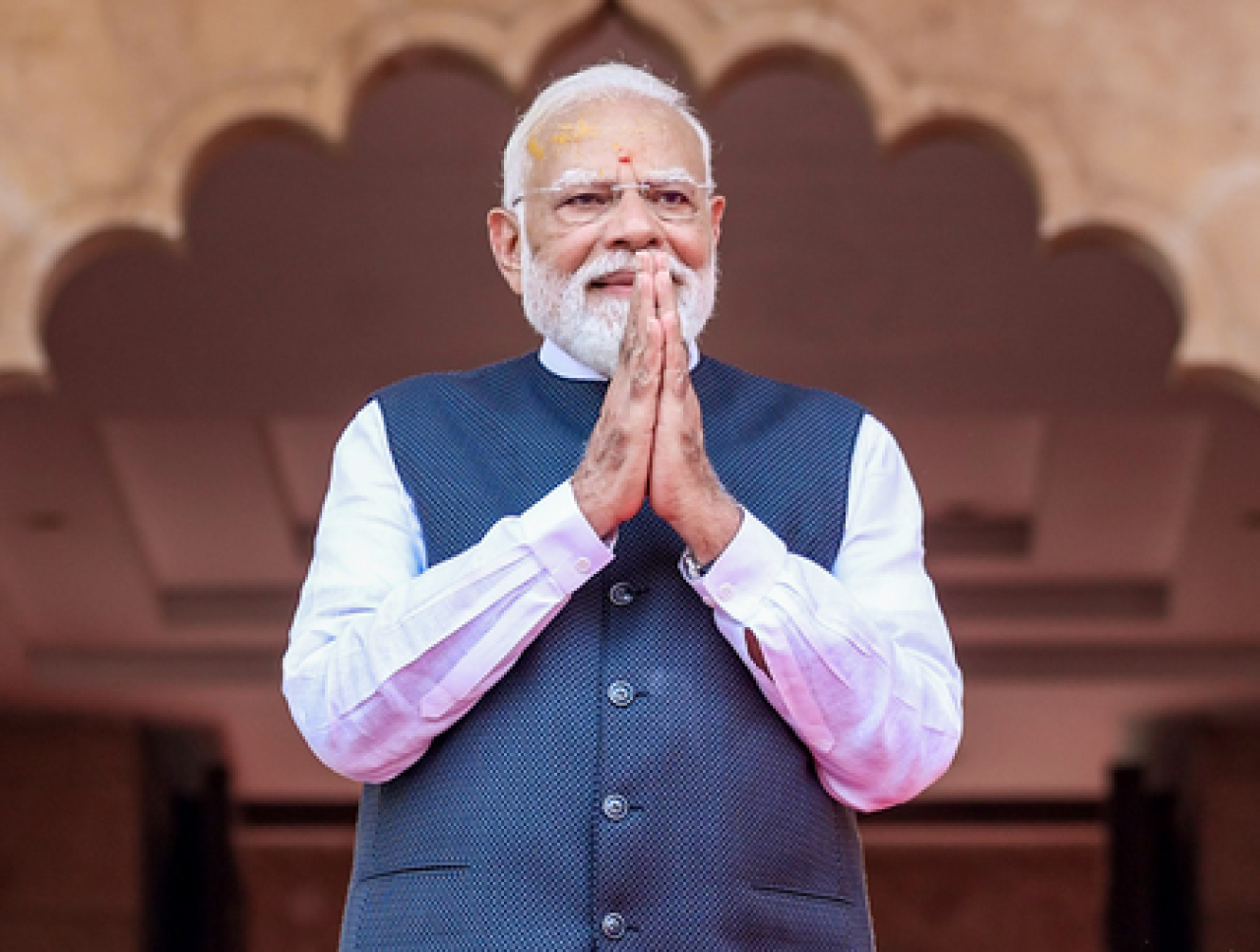
Udaipur, May 2: Prime Minister Narendra Modi’s recent visit to the Kashi Vishwanath temple in Varanasi has brought the ‘Vikramaditya Vedic Clock’ into the national and international spotlight.
During his visit on April 29, PM Modi observed the Vedic Clock after offering prayers, describing it as a “magnificent amalgamation of ancient knowledge and modern scientific perspective.” His remarks sparked widespread reactions on digital platforms, with thousands tuning in to the live broadcast on official channels and television coverage reaching millions. Over 7.8 million viewers engaged with the content across various platforms.
According to a statement released by the Madhya Pradesh government on Saturday, the hashtag ‘Vikramotsav Varanasi’ topped the trending section in India, while several related hashtags also gained significant popularity. Officials noted that this robust response on digital platforms reflects a growing interest in India‘s traditional knowledge systems and their contemporary relevance.
Developed by the Maharaja Vikramaditya Research Institute in Ujjain, the Vedic Clock was presented to Uttar Pradesh Chief Minister Yogi Adityanath by Chief Minister Mohan Yadav and was installed in the temple complex on April 4.
A Madhya Pradesh government official explained the significance of this initiative, stating that the Vikramaditya Vedic Clock presents a scientific interpretation of India’s ancient time system, aiming to make it accessible to the modern generation.
Unlike traditional clocks, the Vedic Clock follows a 30-hour cycle based on sunrise and divides time into 30 muhurats. It also displays detailed elements of the Panchang, including date, nakshatra, yoga, karana, and planetary positions, providing a comprehensive understanding of the traditional Indian calendar system.
This initiative has also been extended to the digital realm through the Vikramaditya Vedic Clock mobile application, available on the Google Play Store and App Store. Supporting over 189 languages, the app provides information on sunrise and sunset times, auspicious and inauspicious timings, and a Panchang covering 7,000 years from the Mahabharata era to the present. It also includes an alarm feature based on the Vedic time system.
Highlighting future plans, another Madhya Pradesh government official mentioned that following the success of this initiative in Varanasi, similar Vedic clocks are planned to be installed at major religious sites across the country, including prominent Jyotirlinga locations and the Ram Temple in Ayodhya, to disseminate this knowledge tradition to a wider audience.
Officials believe that this project is not only a cultural establishment but also a step towards bringing India’s traditional scientific heritage to a global platform. By connecting ancient knowledge with modern accessibility, the Vikramaditya Vedic Clock symbolizes how heritage and technology can collaborate to create meaningful public engagement.