
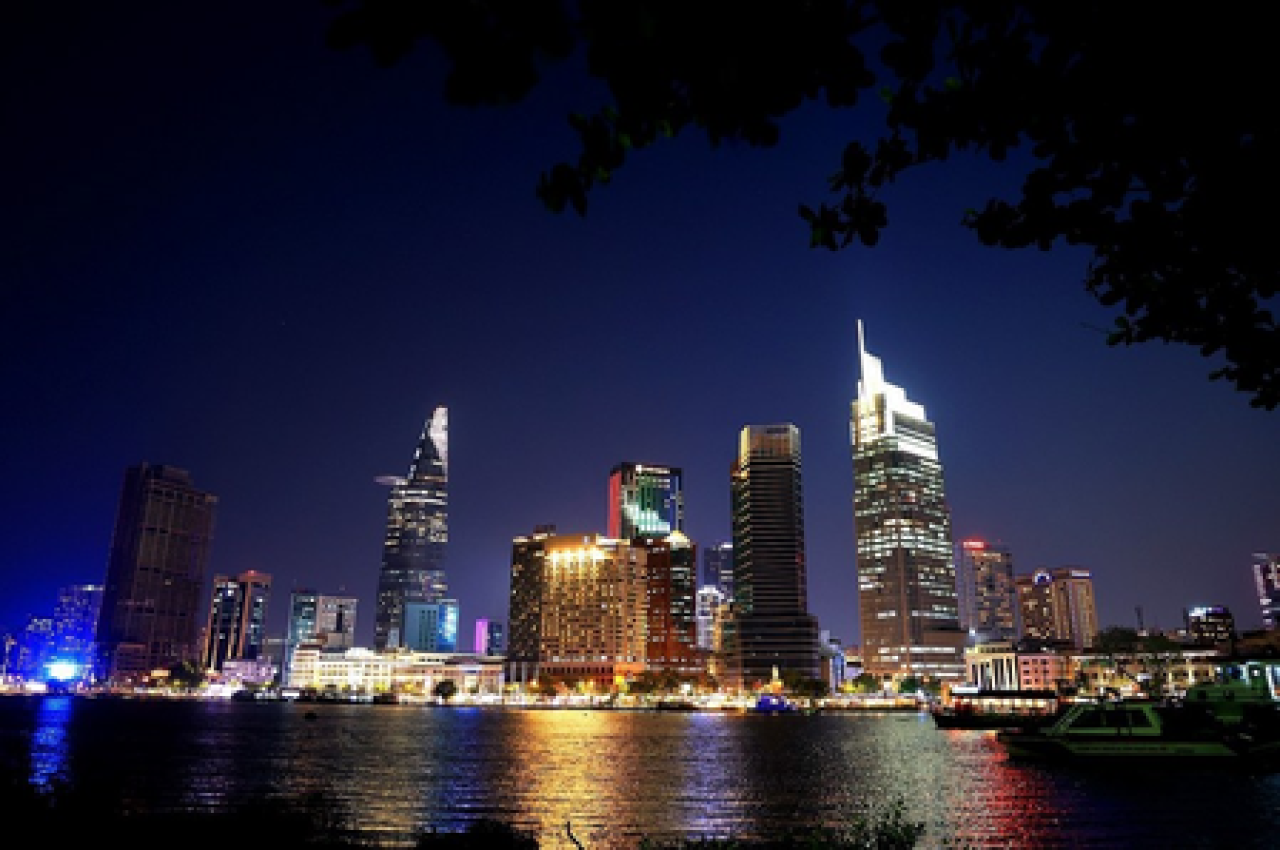
Hanoi, May 18: Vietnam’s southern economic hub, Ho Chi Minh City, has approved a master plan outlining its vision for the years 2025 to 2050. This ambitious plan aims to establish the city as a leading, sustainable, innovative, and livable mega-city in the Asia-Pacific region over the next century, as reported by local media on Monday.
According to the framework approved by the municipal People’s Committee, the city targets an annual gross regional domestic product (GRDP) growth rate of at least 10% from 2025 to 2050. Under favorable conditions, the total GRDP is projected to reach approximately $1.2 trillion by 2050, as cited by the news agency Xinhua referencing local media outlet VN Economy.
The plan envisions Ho Chi Minh City as a major regional center for economy, finance, trade, services, logistics, tourism, education, healthcare, science, technology, and innovation. It emphasizes the need to balance economic development with environmental protection, social equity, and the preservation of cultural heritage.
The framework includes the development of a multi-centered mega-urban model with modern infrastructure, smart governance, and enhanced capacity to address climate change. Additionally, it aims to elevate citizens’ income and living standards to among the highest in Southeast Asia.
Covering an administrative area of over 6,700 square kilometers, the plan also secures land for reclamation to meet future economic needs. Reports suggest that the city’s population could reach between 20 to 22 million by 2050.
In a related development, the Vietnamese government has approved a list of 70 prioritized high technologies for investment and development, effective from July 1, 2026. Vietnam Television reported this on Monday.
The list includes technologies such as artificial intelligence (AI), big data and data analytics, cloud computing, edge computing, distributed computing, and high-performance computing.
Furthermore, it encompasses the Internet of Things (IoT), blockchain technology, quantum technology, renewable and clean energy technologies, advanced energy storage technologies, and AI-based real-time disaster monitoring, forecasting, and early warning systems.
The government has also released a list of 100 high-tech products that will be promoted for development, including AI and data-based systems, tools and software related to identification, analysis, forecasting, and control, as well as platforms supporting AI research, development, and application.
According to reports, the list features unmanned aerial vehicles (drones), environmentally friendly new energy vehicles, bio-pharmaceutical products for health and agricultural use, next-generation vaccines, medical biological products, and diagnostic biological products.