
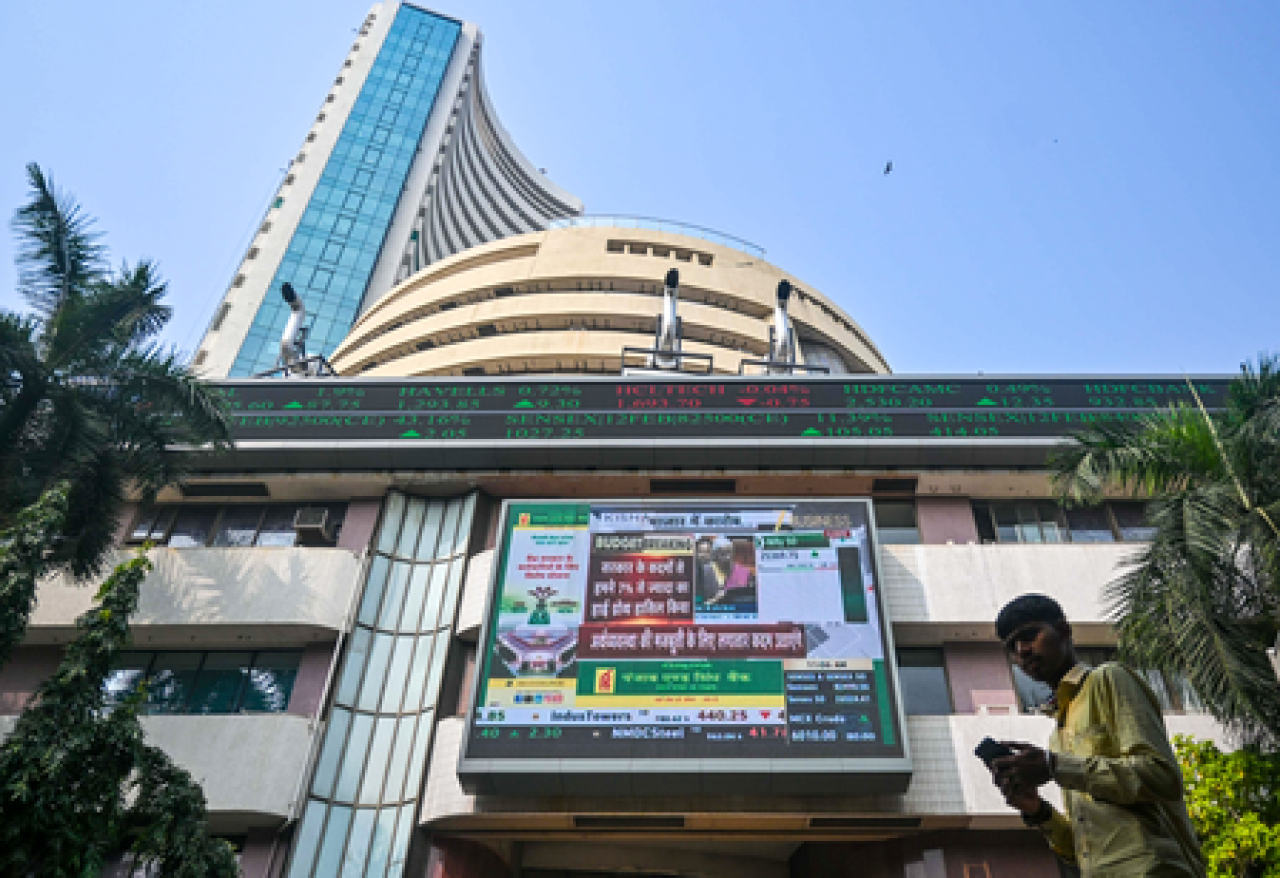
Mumbai, June 6: The Indian stock market closed lower for the second consecutive week, with major indices facing declines. Despite some positive policy measures taken domestically, the impact was limited due to global uncertainties and external challenges.
During the week, the Nifty 50 recorded a drop of 0.77 percent. On the last trading day, Friday, the Nifty fell by 0.21 percent, closing at 23,366 points. Meanwhile, the Sensex ended the week down by 116.67 points, or 0.16 percent, closing at 74,243.34. Overall, the Sensex saw a decline of 0.71 percent throughout the week.
Geopolitical tensions in West Asia and fluctuations in crude oil prices continued to exert pressure on investor sentiment. However, a slight easing in crude oil prices provided some relief to the market intermittently.
A market analyst noted that the Indian stock market traded within a limited range throughout the week, displaying a mildly negative trend, although some improvement was seen towards the end of the week.
Analysts indicated that measures taken by the Reserve Bank of India’s Monetary Policy Committee (MPC) to increase liquidity and stabilize the rupee have boosted investor confidence. However, a downgrade in economic growth forecasts dampened enthusiasm, leading many investors to opt for profit booking.
Experts believe that easing investment for foreign investors, reducing tax-related barriers in the bond market, and encouraging capital flows are positive steps for the market. During this period, the Indian rupee strengthened against the US dollar, falling below the 95 rupee mark.
Investors welcomed the RBI’s efforts to attract foreign capital and maintain rupee stability. Overall, despite external challenges, domestic economic strength kept market sentiment cautious yet stable.
Market experts suggest that investors will now focus on the continuity of RBI’s supportive policies, inflation trends, and the direction of bond yields. They noted that with the earnings season for companies concluded, the market may trade within a limited range, as investors await clearer signals regarding economic growth and global stability.
In contrast, broader market indices performed differently from major indices. The Nifty Midcap 100 index saw a sharp decline of 1.57 percent, while the Nifty Smallcap 100 index recorded a slight drop of 0.16 percent.
According to market experts, the Nifty may face strong resistance between the 23,450 to 23,550 levels, while the 23,250 level remains a significant support. The Bank Nifty is expected to encounter immediate resistance in the 54,800 to 55,000 range, with the 54,000 to 53,800 points acting as crucial support.
Investors are now keenly observing the progress of the monsoon and its impact on rural demand. Globally, the situation in West Asia and changes in crude oil prices will remain key factors. Additionally, progress in trade talks between India and the United States could provide new direction to the market.