
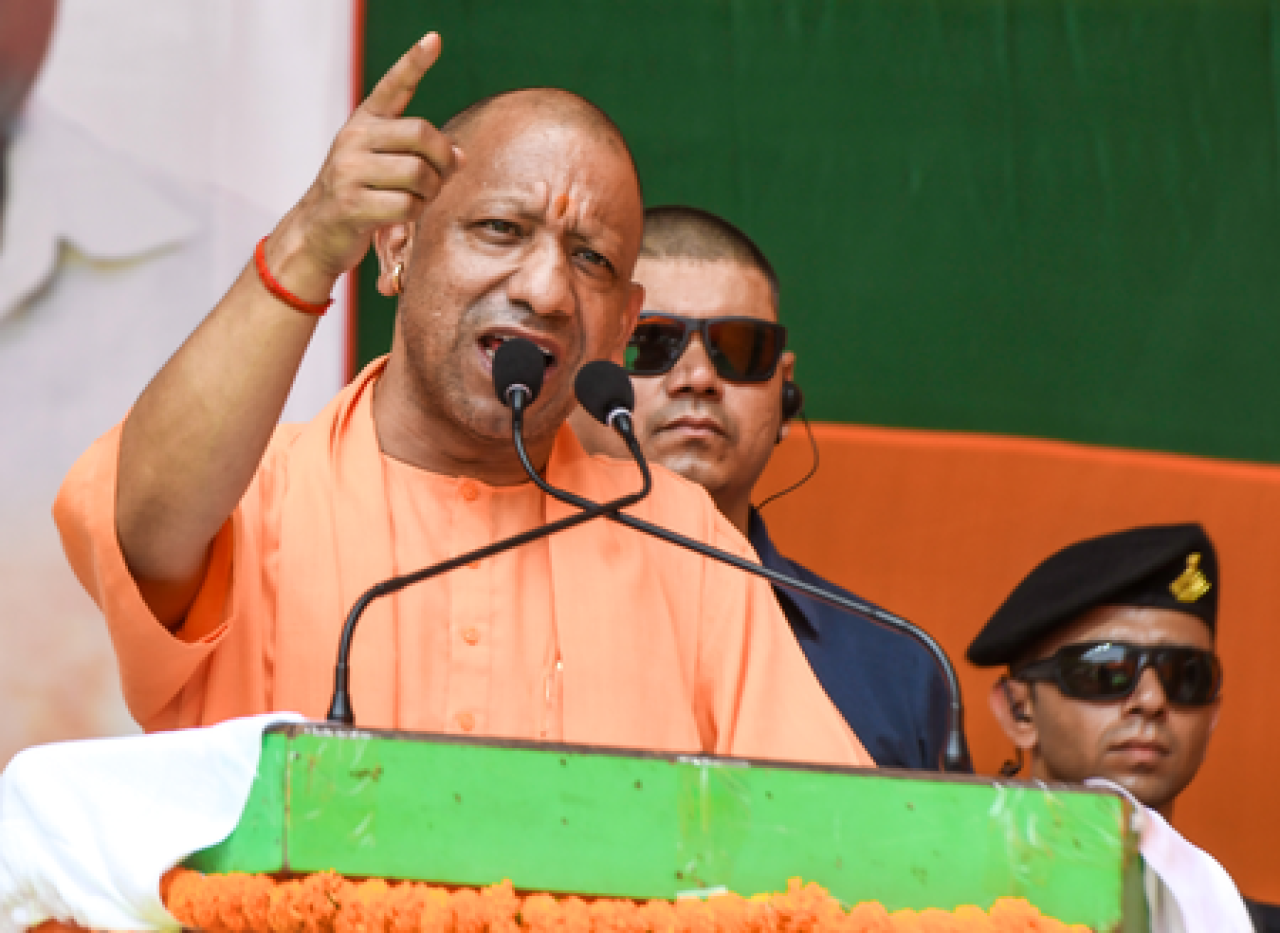
Lucknow, May 20: Uttar Pradesh Chief Minister Yogi Adityanath held a high-level review on Wednesday regarding three significant topics related to the future economy of the state: the Uttar Pradesh Data Center Cluster (UPDCC), Project Ganga, and the promotion of in-house processing of wheat, including potential exemptions from market fees and cess.
During the review of the UP Data Center Cluster, CM Yogi emphasized that this project will lay the infrastructure for the state’s AI mission. He stated that the data center cluster should not be limited to the NCR region but should also connect other parts of the state. He directed that the initiative could begin in the Bundelkhand Industrial Development Authority (BIDA) area, where large tracts of land are available.
He also mentioned the need to engage with major tech companies, including the Tata Group, to develop Lucknow as an ‘AI City.’ The meeting highlighted that the Uttar Pradesh Data Center Cluster is part of a long-term strategy to make the state the largest AI computing power center in India and the Global South. The aim is to transform Uttar Pradesh into a global hub for artificial intelligence, data centers, cloud infrastructure, and high-tech digital manufacturing.
The presentation indicated that this is not just a project but a blueprint for the new economic structure of Uttar Pradesh for the next 50 years. The goal is to achieve an economy of $5 trillion by 2040, create over 150,000 direct jobs, and develop a 5-gigawatt AI compute corridor. The meeting noted that by 2040, the new economy will revolve around sectors like AI, cloud, cybersecurity, semiconductors, electric vehicles, robotics, and space technology, with a combined global market potentially reaching $29 to $48 trillion.
Sectors such as AI software and services, cloud services, cybersecurity, semiconductors, aerospace, and electric vehicles are expected to be the major economic engines for India. The meeting also underscored the state’s five key structural strengths: geographical location, vast land availability, large youth population, rapidly developing infrastructure, and strong leadership. Uttar Pradesh’s inland location makes it safe from maritime risks and cyclones, while expressways, airports, logistics networks, and power infrastructure are developing rapidly. The presence of IIT Kanpur, NIT Prayagraj, and over 50 engineering institutions provides a vast pool of technical talent in the state.
The meeting described Uttar Pradesh as ‘Asia’s most secure, scalable, and connected inland AI territory.’ It was noted that nearly all major fiber networks pass through UP, and the state is connected to all marine cable landing points in India. The latency within the state is less than 5 milliseconds, with connectivity to digital hubs like Mumbai and Chennai ranging from 5 to 12 milliseconds.
CM Yogi also reviewed ‘Project Ganga,’ or Government Assisted Network for Growth and Advancement. He instructed that quality training should be provided to youth selected as digital entrepreneurs. He emphasized the need for companies conducting surveys to utilize these youths effectively.
The Chief Minister stressed the rapid expansion of the optical fiber network and ensuring complete transparency in operations. The meeting noted that limited services are possible only through mobile internet, while real digital transformation requires high-speed broadband. A robust digital infrastructure is deemed essential for AI-based agriculture, drone monitoring, smart villages, virtual labs, telemedicine, and cloud computing services. Under Project Ganga, DSPs will not only be internet service providers but will also develop a comprehensive network of digital services in rural areas, offering high-speed broadband, IPTV, OTT access, CCTV solutions, public Wi-Fi, cybersecurity, and enterprise connectivity.
Under the plan, each DSP will be eligible for an interest-free loan of up to 500,000 rupees. The Chief Minister also conducted a detailed review of strategies to promote in-house processing of wheat. He stressed the need to improve the market tax and fee system, stating that the state’s markets should be modern, clean, and attractive. He directed that cleanliness, painting, lighting during festivals, removal of encroachments, and better management should be ensured in the markets. The committee suggested that exemptions from market fees and development levies be granted on wheat purchased for processing within the state by registered mills, but this exemption should not apply to commercial activities.
–
Wiketi/DKP